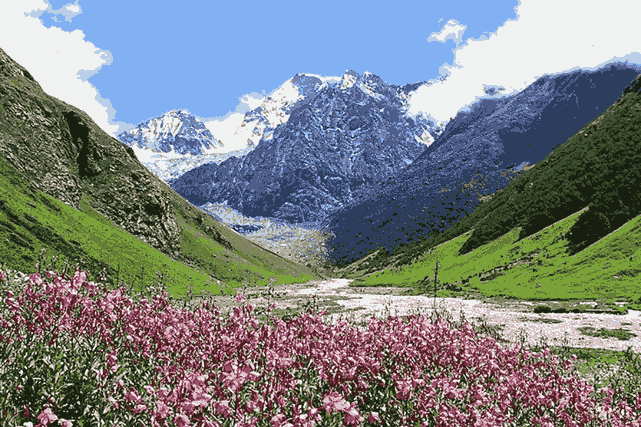
Hidden deep in the Garhwal Himalayas, the Valley of Flowers National Park is one of the most beautiful natural places in India. It is also a UNESCO World Heritage Site, which shows its importance and unique beauty. This valley is not just a tourist destination—it is a rich natural ecosystem that comes alive with colors during the monsoon season.
The valley is located in the Chamoli district of Uttarakhand, at an altitude of about 3,658 meters above sea level, and spreads across nearly 87 square kilometers. During winter, the entire area remains covered with snow. However, as the snow melts in summer, the valley slowly transforms into a colorful landscape filled with hundreds of blooming flowers.
Because of this seasonal change, every visit feels different and special. When you walk through the valley, surrounded by mountains, fresh air, and vibrant flowers, it feels peaceful—almost like stepping into a completely different world, far away from busy city life.
Key Attractions
1. Alpine Flower Diversity
The valley hosts over 500 species of wildflowers, many of which are rare and found only in this region. In fact, this rich variety makes the valley one of the most unique floral destinations in India.
Some of the most notable flowers include:
- Brahma Kamal (state flower of Uttarakhand)
- Blue Poppy (Meconopsis)
- Cobra Lily
- Primulas, marigolds, daisies, and orchids
Moreover, these flowers do not bloom all at once. Instead, they bloom in different phases throughout the season. Because of this, the valley keeps changing its colors every few weeks, offering a new and beautiful view each time you visit.
2. Rich Flora & Fauna
The park is part of the Nanda Devi Biosphere Reserve, so it supports rich biodiversity. Because of this, it is home to various wildlife species such as:
- Himalayan black bear
- Musk deer
- Snow leopard (rare)
- Butterflies and birds
Moreover, these species live in a natural and protected environment. Although large animals are rarely seen, the presence of birds and butterflies makes the valley lively and beautiful.
3. Pushpawati River
The Pushpawati River flows gently through the valley, adding to its natural beauty. Moreover, this glacial river originates from the surrounding Himalayan glaciers, which makes its water fresh and pure.
In addition, the river plays an important role in sustaining the valley’s ecosystem by providing water to the plants, flowers, and wildlife. Because of this, the valley remains green and full of life during the blooming season.
At the same time, the soothing sound of flowing water creates a calm and peaceful atmosphere, making the entire experience even more relaxing for visitors.
4. Untouched Natural Landscape
Unlike many crowded tourist destinations, this valley remains well-protected and carefully preserved. Because of this, it offers raw and untouched Himalayan beauty that feels truly natural.
Moreover, strict environmental rules help maintain its cleanliness and protect its delicate ecosystem. As a result, visitors can experience pure nature without pollution or heavy commercialization.
In addition, the valley’s peaceful surroundings, fresh air, and unspoiled scenery make it a perfect place to relax and connect with nature.
Best Time to Visit
Choosing the right time to visit the Valley of Flowers National Park is very important because the valley changes its appearance every few weeks. Unlike other destinations, this place is season-dependent, and your experience will vary based on the month you visit.
June (Opening Season)
- Valley opens after winter (usually June 1st week)
- Snow starts melting
- Fresh greenery everywhere
- Very few flowers
Best for: Peaceful travel, less crowd
Not ideal for: Flower lovers
July – Bloom Begins
- Flowers start blooming across the valley
- Weather becomes more pleasant
- Landscape turns colorful
Best for: Early bloom experience
Crowd level: Moderate
August – Peak Bloom
- Valley is fully covered with flowers
- Maximum variety of species
- Most vibrant and photogenic views
Best for: Photography, nature lovers
My suggestion: Visit between mid-July to mid-August
September – Calm & Fading Beauty
- Flowers start fading
- Fewer tourists
- Peaceful environment
Best for: Silent and less crowded trips
October to May – Closed
- Heavy snowfall
- Trek route inaccessible
- Valley remains completely closed
Final Recommendation
Best overall time:
Mid-July to Mid-August (Perfect balance of weather + full bloom)
If you want:
- Maximum flowers → August
- Less crowd → June or September
How to Get There – Valley of Flowers
Reaching the Valley of Flowers National Park is a journey that blends road travel with a scenic Himalayan trek. While it requires some effort, every step of the journey is incredibly rewarding.
By Air
- Nearest Airport: Jolly Grant Airport
- Distance to Govindghat: ~295 km
-
From the airport, you can:
- Hire a taxi
- Take a bus towards Joshimath/Govindghat
Travel time: 9–11 hours by road
By Train
Nearest Railway Station: Rishikesh Railway Station
- Alternative: Haridwar Railway Station (better connectivity)
From there:
- Buses and shared taxis are available
- Route goes via Devprayag → Rudraprayag → Joshimath
Travel time: 10–12 hours
By Road
Route:
Haridwar / Rishikesh → Devprayag → Rudraprayag → Karnaprayag → Joshimath → Govindghat
- Total Distance: ~270–300 km
- Time: 10–12 hours
Roads are scenic but mountainous—start early morning.
Conclusion
The Valley of Flowers National Park is more than just a destination—it’s an experience that stays with you long after you’ve left. From the vibrant carpets of wildflowers to the quiet rhythm of the mountains, every moment here feels pure and unforgettable.
What makes this place truly special is not just its beauty, but the journey it offers—walking through misty trails, crossing wooden bridges, and finally stepping into a valley that feels almost magical. It reminds you how powerful and peaceful nature can be when untouched.
Whether you’re a trekker, a nature lover, a photographer, or simply someone looking for a break from the chaos of daily life, this hidden gem in Uttarakhand promises something meaningful for everyone.
So if you’re planning your next trip, don’t just look for a place to visit—choose a place to feel. And the Valley of Flowers is exactly that kind of place
