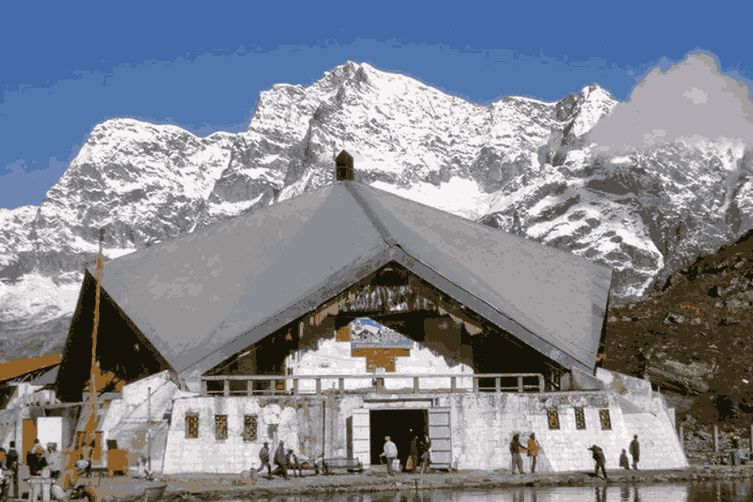
Hemkund Sahib is not only one of the highest pilgrimage sites in India but also among the most spiritually significant destinations in the Himalayas. Located in the Chamoli district of Uttarakhand at an altitude of 4,329 meters (14,200 ft), it offers a rare combination of devotion, natural beauty, and adventure.
Moreover, the site is surrounded by seven majestic snow-covered Himalayan peaks, which create a breathtaking and peaceful atmosphere. At the center lies a crystal-clear glacial lake, reflecting the mountains like a mirror. As a result, the entire setting feels divine and calming, making it a truly unique experience for visitors.
In addition, Hemkund Sahib is deeply connected with the beliefs of devotees, especially those who follow Sikhism. Every year, thousands of pilgrims, trekkers, and nature lovers visit this sacred place not only for religious purposes but also to experience the serenity of the mountains.
Furthermore, the journey to Hemkund Sahib is not just about reaching a destination—it is about the experience along the way. From scenic trails and flowing rivers to peaceful forests and fresh mountain air, every step of the trek adds to the overall beauty of the journey.
Therefore, whether you are seeking spiritual peace, adventure, or a connection with nature, Hemkund Sahib offers an unforgettable experience that stays with you long after the journey ends.
Spiritual Significance
Hemkund Sahib holds deep spiritual importance, especially in Sikhism, and is considered a place of faith, meditation, and inner awakening.
It is believed that Guru Gobind Singh meditated here in his previous life, as mentioned in the Dasam Granth. Therefore, for Sikh devotees, visiting this sacred place is not just a journey but a way to connect with their Guru and strengthen their faith.
Moreover, the name Hemkund comes from Sanskrit, where “Hem” means snow and “Kund” means lake, together meaning “Lake of Snow.” This perfectly describes the serene glacial lake surrounded by snow-covered peaks.
In addition, a beautifully designed Gurudwara stands beside the lake, where devotees gather to pray and experience peace. Pilgrims often take a dip in the icy water of the lake, believing that it helps in spiritual cleansing and purification of the soul.
Furthermore, the site is also sacred for Hindus. Nearby, there is a temple dedicated to Lakshman, who is believed to have meditated here after the war described in the Ramayana. This makes Hemkund Sahib a place where multiple spiritual beliefs come together.
As a result, the atmosphere here feels calm, powerful, and deeply spiritual. The silence of the mountains, the fresh air, and the holy surroundings create a sense of mental peace, positivity, and inner strength.
The Route — Getting There Step by Step
Starting Point: Govindghat
All Hemkund Sahib yatras begin at Govindghat — a small town located approximately 275 km from Rishikesh on the Rishikesh-Badrinath highway. This is the last point accessible by vehicle, where the motorable road ends and the trek begins.
How to Reach Govindghat
By Air: The nearest airport is Jolly Grant Airport near Dehradun. From there, taxis and buses operate toward Govindghat. Expect an 8 to 10 hour drive north through Rishikesh, Rudraprayag, and on to Joshimath before descending to Govindghat.
By Train: The nearest railway station is Haridwar, which is well connected to major Indian cities. From Haridwar, take a bus or hire a taxi to Joshimath or directly to Govindghat.
By Road: Most travelers follow the Delhi to Haridwar to Govindghat route via Rishikesh and Joshimath. This is the most popular approach, with plenty of buses and shared taxis available.
The Trek Route in Simple Steps
Step 1 — Govindghat to Pulna (4 km by road): Many trekkers save time by taking a jeep or taxi from Govindghat to Pulna village, cutting 4 km off the initial walk.
Step 2 — Pulna to Ghangaria (9 km trekking): The trail follows the Pushpawati River through beautiful forests. This is a well-maintained path with regular rest points, tea stalls, and clear signage. It takes approximately 5 to 7 hours at a comfortable pace.
Step 3 — Ghangaria overnight rest: This is mandatory and important. Spending the night at Ghangaria (3,100 metres) lets your body acclimatize to the altitude before the harder climb the next day.
Step 4 — Ghangaria to Hemkund Sahib (6 km): The final and most sacred stretch. Steep, paved, and demanding — but lined with fellow pilgrims chanting, praying, and encouraging each other every step of the way.
Weather — When to Go and What to Expect
The Season
The Hemkund Sahib Yatra typically begins in late May or early June each year, depending on weather conditions and the melting of snow in the high Himalayan region. The yatra continues throughout the summer and early autumn months, typically until early October, when heavy snowfall begins to return to the region.
Month by Month Guide
May to Early June — Opening Season The shrine opens (usually around May 25) and the snow is still melting. The landscape is dramatically beautiful — patches of snow alongside the first spring flowers. Fewer crowds, but the path can be icy and slippery in places. Not recommended for first-time trekkers.
Mid-July to August — Peak Season This is when the Valley of Flowers and Hemkund Sahib trek is at its most stunning, with wildflowers in full bloom. Expect rains and slippery paths during monsoon.
The trail is at its most alive and beautiful, but also most crowded. Monsoon rains can make the path slippery — rain gear is essential. Check weather reports daily.
September — The Sweet Spot September offers clear skies, crisp air, and fewer pilgrims — a great balance of beauty and tranquility.
The wildflowers are fading but the mountain views are at their clearest. The crowds have thinned. The mornings are cold and brisk, and the light on the peaks in the afternoon is extraordinary. Many experienced trekkers consider September the best month of all.
October — Closing Season Gurudwara Hemkund Sahib closes for darshans from October 10 in routine.
The route closes quickly as snowfall returns. Do not plan a late October visit without checking conditions very carefully.
Temperature Guide
| Month | Day Temperature | Night Temperature |
|---|---|---|
| June | 10°C to 15°C | 2°C to 5°C |
| July–August | 12°C to 18°C | 5°C to 8°C |
| September | 8°C to 15°C | 0°C to 5°C |
| October | 2°C to 10°C | -5°C to 0°C |
The weather changes very rapidly at Hemkund Sahib, so always keep warm clothes and a raincoat ready every time during your visit.
What to Pack
Clothing:
- Warm jacket & thermals
- Gloves, cap, wool socks
- Waterproof jacket
Essentials:
- Trekking shoes
- Water bottle
- Energy snacks
- First aid kit
- Power bank
Health & Safety Tips
- Walk slowly (avoid altitude sickness)
- Drink water regularly
- Take rest at Ghangaria
- Avoid over-exertion
- Consult doctor if needed
Nearby Attractions — Making the Most of Your Trip
If you have an extra day or two, do not leave the area without seeing:
Valley of Flowers — Just 3 to 4 km from Ghangaria, the Valley of Flowers National Park is a UNESCO World Heritage Site and a breathtaking alpine meadow that comes alive between July and September. During this time, the valley transforms into a vibrant carpet of colorful blooms. The diversity of rare Himalayan wildflowers found here is truly unique, making it one of the most beautiful and must-visit destinations in Uttarakhand.
Badrinath Temple — Located about 24 km from Govindghat, Badrinath Temple is one of the sacred Char Dhams and an important pilgrimage site dedicated to Lord Vishnu. Many pilgrims visiting Hemkund Sahib often include Badrinath in their itinerary, making it a spiritually enriching combined journey.
Joshimath — The nearest major town to Govindghat, Joshimath serves as an important base for travelers, offering good accommodation and dining options. Additionally, the popular ski destination Auli is just 16 km away, making it a great add-on to your trip.
Conclusion — A Journey Worth Every Step
The Hemkund Sahib Yatra is not the easiest thing you will ever do. At times, your legs will ache, and the air will feel thin. Along the way, there will be moments on the steep climb when you may briefly wonder why you started this journey.
However, everything changes when you finally arrive.
As you stand beside the still, glacial lake, surrounded by seven majestic peaks that seem to hold the sky in place, you begin to feel a deep sense of calm. At that moment, the sight of the white marble Gurudwara—built at over 4,000 metres as an act of pure devotion—makes all your struggles feel worth it. Instantly, every doubt and difficulty fades away.
In fact, the Hemkund Sahib Yatra is more than just a physical journey—it is a powerful blend of spirituality, natural beauty, and inner strength. With proper planning, patience, and acclimatization, anyone can complete this sacred pilgrimage.
Therefore, prepare wisely, walk mindfully, and respect the mountains. In the end, this journey will not only take you to a holy place but also help you discover peace within yourself.
No matter where you come from or what you seek, the lake, the Gurudwara, and the serene Himalayas are always ready to welcome you.
