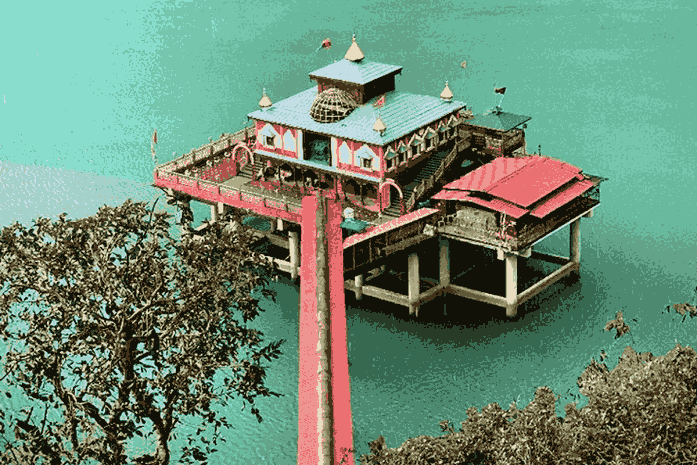
Dhari Devi Temple is not just a place of worship; it also gives you peace, faith, and a deep connection with nature. It stands in the middle of the Alaknanda River and surrounds you with mountains and flowing water, creating a calm and unique experience.
Moreover, the stories, beliefs, and spiritual importance of Maa Dhari Devi make this temple even more special. Many devotees believe that she protects the Char Dham and the entire region, which strengthens their faith.
Whether you come for prayer, travel, or to enjoy nature, you feel a deep sense of peace in your heart. In addition, the temple reminds you to respect nature, trust your faith, and stay connected to something greater.
In the end, a visit to Dhari Devi Temple becomes more than just a journey; it turns into a beautiful and meaningful experience that stays with you forever.
Mythology of Dhari Devi Temple
Every temple has a story, and Dhari Devi Temple has many beautiful and powerful stories that increase people’s faith.
The Idol That Spoke
According to local belief, many years ago, during a flood, the idol of Maa Dhari Devi got stuck near a rock in the river. When villagers found it, they heard a divine voice telling them to place the idol at that exact spot and worship it there.
The goddess also said that she should not be kept under a roof. That is why even today, the idol is placed in the open sky.
The Two Parts of the Goddess
It is believed that Maa Dhari Devi’s idol is divided into two parts:
- The upper part is worshipped at Dhari Devi Temple
- The lower part is worshipped at Kalimath Temple
Devotees believe that visiting both temples is very special and brings more blessings.
Story of Seven Brothers
One popular story says that Maa Dhari Devi was the only sister among seven brothers. After their parents died, her brothers raised her. But later, due to fear and misunderstanding, they harmed her and threw her body into the river.
Her head floated to a village, where a washerman heard a divine voice and saved it. He realized it was a goddess and started worshipping her. This story teaches that true faith and devotion can come from anyone, even a simple person.
Idol Changes During the Day
Many devotees believe that the idol of Maa Dhari Devi changes its appearance during the day:
- Morning – looks like a young girl
- Afternoon – looks like a grown woman
- Evening – looks like an old woman
This belief makes the temple even more mysterious and special.
The 2013 Flood Story
In 2013, the idol was moved from its original place for a project. On the same day, heavy floods hit Uttarakhand, causing major damage, especially near Kedarnath Temple.
Many people believe this happened because the goddess was disturbed. Later, the idol was placed back at the same place, again in the open sky.
Temple Timings
The Dhari Devi Temple Uttarakhand timings are 6:00 AM to 8:00 PM, with morning and evening aarti as highlights.
Darshan Timings:
- Morning: 6:00 AM to 12:00 PM
- Afternoon: 2:00 PM to 5:00 PM
- Evening Aarti: Around 7:00 PM
The morning aarti and evening aarti are the most spiritually charged times to visit. If you can arrange to be there for either, prioritise it.
Entry Fee and Permits
Entry to Dhari Devi Temple is free. No special permits are required. Simply carry a valid photo ID.
Accommodation
Accommodation options are available in Rudraprayag and Srinagar, ranging from budget lodges to mid-range hotels. Most visitors staying overnight base themselves in Rudraprayag — a comfortable town with a range of guesthouses and hotels, and a beautiful setting at the confluence of the Alaknanda and Mandakini rivers.
Best Time to Visit
Spring — March to June
The best time to visit Kapileshwar Mahadev Temple is from March to June — and the same applies beautifully to Dhari Devi. The weather is warm and pleasant during the day, the Himalayas are visible in their full glory against clear blue skies, and the Alaknanda is lively without being dangerous.
This is also the season of the Char Dham Yatra — when hundreds of thousands of pilgrims travel through the region toward Kedarnath, Badrinath, Gangotri, and Yamunotri. Many stop at Dhari Devi to seek the guardian goddess’s blessing before the journey. The atmosphere during these months is electric with devotion.
Autumn — September to November
While there is all-year-long entry to the temple, March through June and September through November are the ideal times to go. The surrounding natural beauty of Uttarakhand is at its best during these months, and the temperature is agreeable.
September to November is arguably the most beautiful season. The monsoon has cleared, leaving everything washed clean and intensely green. The river is full and powerful. The skies are a deep, clear blue that frames the Himalayan peaks perfectly. And the crowds are thinner than during the spring pilgrimage season.
Navratri — celebrated twice a year in spring and autumn — brings special energy to the temple. Devotees arrive from across Uttarakhand and beyond, and the celebrations at Dhari Devi during Navratri are particularly vibrant.
Travel Tips
- Wear simple and respectful clothes
- Carry cash for small expenses
- Wear comfortable shoes
- Be careful near the river
- Visit during aarti time
Nearby Places Worth Visiting
Since Dhari Devi sits on the Badrinath Highway, the region is rich with extraordinary sites:
Rudraprayag (20 km) — The sacred confluence of the Alaknanda and Mandakini rivers. A beautiful, spiritual town worth spending a night in.
Koteshwar Mahadev Temple (near Rudraprayag) — A cave temple dedicated to Lord Shiva, carved naturally into the rock beside the Alaknanda. Extraordinary and very much worth combining with a Dhari Devi visit.
Devprayag (45 km) — Where the Alaknanda and Bhagirathi rivers meet to form the Ganga. One of the most sacred confluences in India.
Guptkashi (62 km) — Known for the Vishwanath and Ardhanarishvara Temples and an important stopover for Kedarnath pilgrims, offering panoramic Himalayan views.
Tungnath Temple (87 km) — Tungnath Temple is One of the Panch Kedar shrines, the highest Shiva temple in the world at 3,680 metres.
Conclusion
Dhari Devi Temple is not just a place of worship; instead, it is a place where you truly feel peace, faith, and a deep connection with nature. As it sits in the middle of the Alaknanda River, surrounded by mountains and flowing water, it creates a unique and calming experience for every visitor.
Moreover, the stories, beliefs, and spiritual importance of Maa Dhari Devi make this temple even more special for devotees. Many people strongly believe that she protects the Char Dham and the entire region, which further increases their faith and devotion.
Whether you visit for prayer, travel, or simply to enjoy nature, you will feel a deep sense of peace in your heart. In addition, the temple gently reminds you to respect nature, trust your faith, and stay connected to something greater.
In the end, visiting Dhari Devi Temple is not just a journey; rather, it becomes a beautiful and meaningful experience that stays with you forever.
