There is a particular moment on the drive from Devprayag to Rishikesh when the road curves and the river appears below you — wide, swift, unmistakably sacred. The Alaknanda and Bhagirathi have just merged at Devprayag behind you, and what flows ahead is the Ganga herself, moving through a valley carved over millions of years by the patient, unstoppable force of Himalayan water.
You are not just driving between two towns. You are travelling along one of the most sacred river corridors in India, through landscapes that have drawn pilgrims, sages, poets, and wanderers for thousands of years.
The distance between Devprayag and Rishikesh is modest — but the journey is anything but. Every turn reveals a new angle of the river. Every village you pass through carries the quiet weight of centuries of mountain life. And the road itself, following the Ganga through the Garhwal foothills, is one of those drives that makes you genuinely glad you decided to travel by land rather than simply fly over it.
This guide gives you everything — the real distance, the best route, the best time to travel, what to stop for along the way, and what to expect at either end of your journey.
The Distance — How Far is Devprayag from Rishikesh?
By road: approximately 70 to 73 kilometres
The straight-line distance between Devprayag and Rishikesh is about 55 kilometres — but as with all mountain journeys in Uttarakhand, the road does not go in straight lines. It follows the river, winds through hillsides, climbs and descends through small towns, and takes its time in the way that Himalayan roads do.
This is not an inconvenience. It is the entire point.
| Distance Type | Measurement |
|---|---|
| Straight-line distance | ~55 km |
| Road distance (via NH-7) | ~70–73 km |
| Estimated travel time | 1.5 to 2.5 hours |
The variation in travel time is significant — and real. On a midweek morning with light traffic, you can make this drive in 90 minutes comfortably. On a weekend during the Char Dham Yatra season (May to June), with pilgrims, buses, and trucks all using the same narrow mountain highway, the same distance can take three hours or more.
Plan around this reality rather than being surprised by it.
The Best Route — Following the Ganga All the Way
The Main Route: Devprayag → National Highway 7 → Rishikesh
There is essentially one main road connecting Devprayag and Rishikesh, and it is a good one — NH-7 (also referred to in older maps as NH-58), which follows the left bank of the Ganga through the Garhwal hills before emerging into the broader Rishikesh valley.
The route in simple steps:
Devprayag → Byasi → Shivpuri → Laxman Jhula → Rishikesh
This route keeps the Ganga in view — or in earshot — for much of the journey. The road is paved and well-maintained for most of its length. There are several towns along the way where you can stop for tea, food, or simply to stand on a riverbank and look at the mountains.
Road quality: Generally good. Some sections are single-lane with passing challenges. Mountain road etiquette applies — slow down at blind turns, use your horn on curves, yield to vehicles coming uphill.
Recommended for: All vehicle types in good condition. No 4WD required.
An Alternative Perspective: The Right Bank Road
A lesser-known alternative follows portions of the right bank of the river for sections of the journey, passing through smaller villages and offering river perspectives that the main highway misses. This route is not suitable for all vehicles and takes longer — but if you are driving in a capable SUV with time to explore, sections of the right bank road offer a genuinely different and quieter experience.
Best for: Explorers with time, good vehicle, and local knowledge. Ask at Devprayag before attempting.
Travel Time — The Honest Answer
Under normal conditions:
| Traffic Condition | Estimated Time |
|---|---|
| Midweek, morning | 1.5 to 2 hours |
| Weekend, afternoon | 2.5 to 3.5 hours |
| Yatra season (May–June) | 2.5 to 4 hours |
| Monsoon season | Variable — check road conditions |
The single biggest variable is the Char Dham Yatra traffic. From May through June and again in September to October, the highway carries enormous volumes of pilgrim traffic heading to and from Kedarnath and Badrinath. Large buses, shared jeeps, government vehicles, and private cars all share the same mountain road. Patience is not just recommended — it is required.
Best time to travel: Leave Devprayag before 7 AM for the smoothest experience. Early mornings have the lightest traffic and the most beautiful light on the river.
Transportation Options — How to Make This Journey
Private Taxi or Self-Drive (Recommended)
The most comfortable and flexible option. Private taxis are readily available in Devprayag — ask at your hotel or guesthouse for recommendations. A one-way taxi from Devprayag to Rishikesh typically costs between ₹800 to ₹1,500 depending on vehicle type and season.
Self-driving allows you to stop whenever you want — which, on this particular route, matters. You will want to stop.
hared Jeep or Bus
Shared jeeps (Sumos and Bolero taxis) run regularly between Devprayag and Rishikesh throughout the day, particularly in the morning. These are affordable — typically ₹100 to ₹200 per person — and give you the experience of travelling with local pilgrims and mountain residents.
State transport buses also cover this route, though they take longer due to stops. Uttarakhand transport buses depart from the Devprayag bus stand.
Motorcycle
For the confident mountain rider, this route on a motorcycle is genuinely excellent. The curves, the river views, the occasional tunnel, the small towns — all of it is better experienced at motorcycle pace. Helmet and proper riding gear are essential on mountain roads.
Devprayag — What You Are Leaving
Before you even get on the road, spend time in Devprayag. Leaving without understanding what makes this town significant is like skipping the opening chapter of a book.
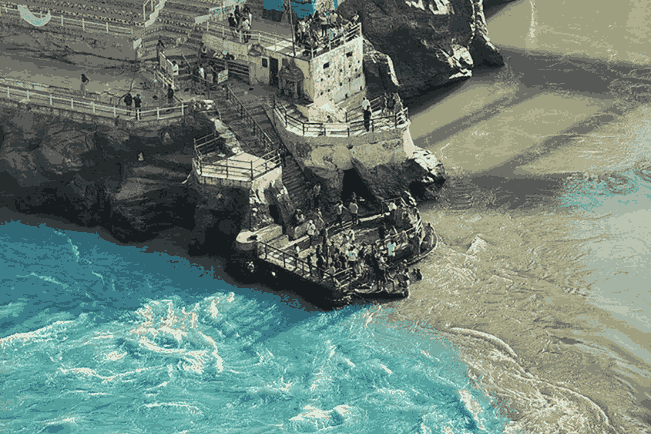
Devprayag is one of the Panch Prayag — the five sacred confluences of the Garhwal Himalayas where significant rivers meet the Alaknanda. At Devprayag, the green-blue Alaknanda and the blue-grey Bhagirathi rivers meet — and what flows from their confluence is the Ganga.
This is the moment the Ganga is born. Not the Ganga of Haridwar’s ghats or Varanasi’s temples — this is where the river receives its name and its identity. Standing at the Sangam (confluence) at Devprayag and watching two distinct rivers become one is a genuinely extraordinary thing to witness.
What to do in Devprayag before you leave:
The Raghunath Temple is the most important temple in town — dedicated to Lord Rama and believed to be several centuries old. The stone steps down to the Sangam are steep but manageable, and the view from the bottom — looking up at the two rivers meeting, with the small town perched on the hillside above — is one of the finest in Uttarakhand.
Arrive at the Sangam at sunrise if possible. The light on the confluence in the first thirty minutes after dawn is something that serious photographers travel specifically to capture.
The town itself is small, quiet, and genuine — not yet overcrowded by tourism. The tea shops along the main street, the sound of temple bells in the morning, the pilgrims pausing here before continuing their Char Dham journey — Devprayag has a character that is worth absorbing slowly.
Points of Interest Along the Route — Do Not Just Drive Through
Byasi — Rafting Country Begins Here
Approximately 25 km from Devprayag, the small settlement of Byasi marks the beginning of the Rishikesh white water rafting zone. This is where the river’s character changes — the valley widens slightly, the current becomes more complex, and you will begin to see the first rafting groups on the water.
If you have any interest in white water rafting, this is a good place to stop and assess the river from above before booking a session in Rishikesh. The view from the road is excellent.
Shivpuri — Where the River and Adventure Meet
About 16 km from Rishikesh, Shivpuri is the starting point for the most popular rafting route in the region — the 16 km stretch to Rishikesh. It is also home to several excellent riverside camps that offer accommodation with the Ganga right outside your tent.
If you are not in a hurry, Shivpuri deserves more than a drive-through. Stop for chai at the river’s edge. Watch rafters come through the rapids. Or simply sit on the bank and feel the river’s energy up close.
The Deodar and Pine Forests
Several stretches of this road pass through beautiful mixed forest — deodar cedar, chir pine, and broad-leaved trees depending on altitude and aspect. In spring (March to May), wildflowers appear along the road edge. In autumn (October), the deciduous sections turn gold and rust.
These forest sections are worth slowing down for. Pull over where it is safe, step out, and breathe. The quality of the air in these forests — resinous, clean, with that particular Himalayan freshness — is something you will remember long after the drive.
The River Viewpoints
Several points along NH-7 offer extraordinary views down into the Ganga gorge — the river rushing through boulder fields far below, its turquoise water visible against the dark rock walls of the gorge. These viewpoints are not always marked, but you will know them when you see them — where the road climbs to a ridge and the valley suddenly opens below you.
Stop at every one. The perspective of the sacred river from above, winding through the mountains it has carved over millennia, is a visual experience that does not lose its power no matter how many times you see it.
Seasonal Considerations — When to Make This Journey
October to November — The Best Season
Post-monsoon clarity means the air is exceptionally clean. The Ganga runs full and beautiful after months of rain. The forests along the road are at their most vivid — the monsoon green transitioning to autumn gold. Crowd levels are moderate. Road conditions are good.
This is arguably the finest time for this particular drive.
March to April — Spring Beauty
The forests begin greening after winter. Rhododendrons bloom in the higher sections. The air is fresh and cool. Traffic is lighter than the Yatra peak season. An excellent time for a quiet, beautiful drive.
May to June — Yatra Season
Beautiful weather and important pilgrimage energy, but significant traffic. The highway carries enormous volumes of Char Dham pilgrim traffic. If you travel in this period, go early in the morning — before 7 AM — and carry patience.
July to September — Monsoon Season
The route remains passable in most years, but landslides can temporarily block the highway after heavy rain. The river runs dramatically high and powerful. Check road conditions before departure. The landscape is extraordinarily green but the risks are real.
December to February — Winter
Devprayag itself is accessible year-round, but the weather is cold and the higher Char Dham routes are closed. The drive to Rishikesh is generally fine in winter conditions. The cold, clear winter light on the river is beautiful.
Arriving in Rishikesh — What Waits for You
After the mountain road, the valley opens and Rishikesh appears — different from Devprayag in almost every way, yet connected by the same river and the same spiritual thread.
Rishikesh is larger, livelier, and more cosmopolitan. The famous suspension bridges of Laxman Jhula and Ram Jhula. The yoga centres and meditation ashrams that have made this the world’s yoga capital. The adventure sports infrastructure — rafting, bungee jumping, zip-lining. The cafés with river views and the evening Ganga Aarti at Triveni Ghat.
After the quiet, contemplative atmosphere of Devprayag, arriving in Rishikesh feels like stepping from a whisper into a conversation. Both have value. Both are expressions of the same Himalayan river culture, separated by 70 kilometres and a world of atmosphere.
What to do first in Rishikesh:
Cross Laxman Jhula on foot — the iconic suspension bridge that sways gently over the Ganga, with temples on both banks and the river rushing below. Then find a riverside café, sit down with something warm, and look back up the valley in the direction you came from.
Somewhere up there, 70 kilometres away, two rivers are still merging into the Ganga. And the same water that you watched at Devprayag’s Sangam is now flowing past your table, carrying prayers and snowmelt from the high Himalayas all the way to the sea.
Practical Tips — Making This Journey Easy
1. Start early. Whatever day you travel, leaving Devprayag before 7 AM gives you the quietest roads, the best morning light on the river, and the most flexibility for stops along the way.
2. Carry cash. Petrol stations, chai stalls, and emergency needs along mountain roads are cash-based. Withdraw before you leave.
3. Download offline maps. Mobile connectivity can be patchy in the gorge sections between Devprayag and Byasi. Download your maps before you leave.
4. Petrol in Devprayag. Fill up before starting if you are self-driving. The next reliable petrol station is in Shivpuri or Rishikesh.
5. Dress in layers. Devprayag can be considerably cooler than Rishikesh due to altitude. You will likely be shedding layers as you descend toward the broader valley.
6. Eat in Devprayag. The small restaurants and dhabas in Devprayag serve simple, excellent Garhwali food. Eat a good breakfast before you drive — it is a more interesting culinary experience than the highway stops along the way.
7. Check the weather. During monsoon season particularly, check road condition updates before departure. The Uttarakhand government road helpline (1800-180-4145) provides updates during periods of heavy rain.
Quick Reference — Devprayag to Rishikesh
| Detail | Information |
|---|---|
| Road Distance | ~70–73 km |
| Estimated Time | 1.5 to 2.5 hours (normal conditions) |
| Best Route | NH-7 via Byasi and Shivpuri |
| Best Time to Travel | Early morning (before 7 AM) |
| Best Season | October–November and March–April |
| Taxi Fare (approx.) | ₹800–₹1,500 (one way) |
| Shared Jeep Fare | ₹100–₹200 per person |
| Key Stops | Devprayag Sangam, Byasi, Shivpuri |
| Nearest Railway to Rishikesh | Rishikesh Railway Station |
| Nearest Airport | Jolly Grant, Dehradun (~20 km from Rishikesh) |
Conclusion — 70 Kilometres Worth Taking Slowly
The distance between Devprayag and Rishikesh is 70 kilometres. In terms of landscape, culture, and spiritual weight, it covers considerably more.
This is a drive to do without rushing. Stop at the confluence in Devprayag and watch two rivers become one. Pull over at the viewpoints where the gorge opens below. Sit by the river at Shivpuri for fifteen minutes before continuing. Arrive in Rishikesh with the evening aarti still ahead of you.
The Ganga runs the whole way. The mountains watch from both sides. And if you pay attention — to the river, to the road, to the occasional village where a chai shop has been serving mountain tea to travellers for decades — this 70-kilometre drive will give you more than most destinations ten times farther away.
That is the particular gift of Uttarakhand. The distances are short. The experiences are long.
Take your time with this one.
