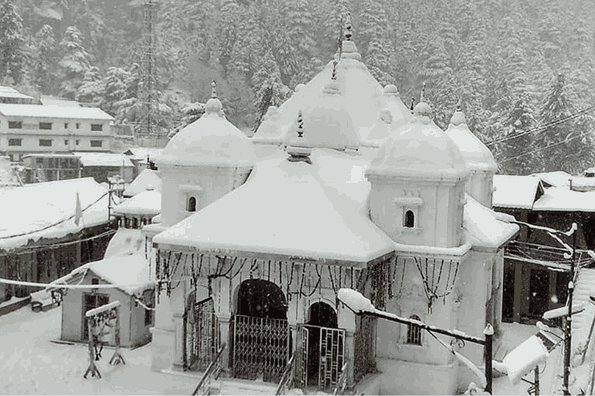
Yamunotri Temple is located in the remote and scenic Uttarkashi district of Uttarakhand, surrounded by high Himalayan mountains and natural beauty. The temple sits at an altitude of around 3,293 meters (10,804 feet), which means the air is cooler and thinner compared to lower regions.
Due to its high-altitude location, Yamunotri is not directly accessible by road. The nearest road point is Janki Chatti, a small settlement that serves as the base for the final stretch of the journey.
From Janki Chatti, visitors must complete a 5–6 km trek to reach the temple. This route passes through mountain paths, forests, and scenic valleys, making it both a spiritual and adventurous experience.
since the temple is at a high altitude, walk slowly during the trek and give your body time to adjust.
Complete Route to Yamunotri (Step-by-Step)
Main Route
The most common and convenient route to reach Yamunotri Temple starts from Delhi and passes through Haridwar, Rishikesh, Barkot, and Janki Chatti. From Janki Chatti, a 6 km trek leads you to the temple. This route is widely preferred by pilgrims as it offers a balanced combination of road travel and a short Himalayan trek, making the journey both accessible and spiritually enriching.
Total Distance & Travel Time
The total distance from Delhi to Yamunotri is approximately 470–500 km. The journey usually takes around 12–14 hours of driving time, which is why most travelers prefer to complete it over two days with a halt at Barkot or Janki Chatti. The first stretch from Delhi to Haridwar takes about 5–6 hours on a smooth highway, while the onward journey into the hills becomes slower due to winding roads and elevation gain. Proper planning with rest stops is essential to avoid fatigue, especially before starting the trek.
Road Conditions Overview
The road conditions vary significantly along the route. The stretch from Delhi to Haridwar and Rishikesh is well-maintained and ideal for all types of vehicles, offering a comfortable driving experience. However, once you move beyond Rishikesh towards Barkot, the terrain changes to mountainous roads with sharp bends, steep climbs, and narrow sections. The final stretch from Barkot to Janki Chatti is comparatively more challenging, with narrow roads and occasional rough patches, especially during the monsoon season when landslides can occur. Overall, while the journey is scenic and rewarding, it requires cautious driving and awareness of hill road conditions.
Mountain Driving Tips
Driving in the Himalayan region requires extra care and preparation. It is advisable to start early in the morning to avoid driving in low visibility or late evening conditions. Always use lower gears while ascending or descending steep roads to maintain control over the vehicle. Avoid overtaking on blind curves and be mindful of oncoming traffic on narrow roads. Ensure that your vehicle’s brakes are in good condition before entering hilly terrain, and keep sufficient fuel as petrol pumps become limited after Barkot. During the monsoon season, checking weather updates and landslide alerts can help prevent unexpected delays and ensure a safer journey.
Trek to Yamunotri Temple
The trek to Yamunotri Temple is one of the most memorable parts of the Char Dham journey. Starting from Janki Chatti, this short yet scenic trek combines spirituality with the raw beauty of the Himalayas, making it suitable for both pilgrims and beginner trekkers.
Trek Overview
The trek covers approximately 6 km (one way) and takes around 3 to 5 hours, depending on your pace and physical fitness. Workers maintain a well-paved path with gradual ascents and a few steep sections along the way. As you walk, lush valleys, waterfalls, and snow-capped peaks surround you, creating a peaceful and energizing atmosphere throughout the journey.
Trek Route Experience
The trail begins at Janki Chatti and gradually climbs through narrow mountain paths lined with tea stalls, resting points, and small shops. Along the way, you will hear the soothing sound of the Yamuna River flowing beside the trail. The route can get crowded during peak yatra season, but the vibrant energy of fellow pilgrims chanting and walking together adds to the spiritual vibe of the trek.
Trek Options Available
For those who may not prefer walking the entire distance, there are several options available. Ponies and mules are commonly used for riding up the trail, while palkis (palanquins) are available for elderly or physically challenged pilgrims. Porters can also be hired to carry luggage or assist during the trek, making the journey accessible for people of all age groups.
Difficulty Level
The Yamunotri trek is considered easy to moderate. While it does not require advanced trekking skills, the altitude and steep stretches can make it slightly challenging for beginners or those not used to walking in hilly terrain. Taking short breaks, walking at a steady pace, and staying hydrated can make the trek much more comfortable.
Essential Trek Tips
Start the trek early in the morning to avoid crowds and return before evening. Wear comfortable trekking shoes with a good grip, as the path can get slippery in certain sections. Carry warm clothing, even in summer, since temperatures drop quickly at higher altitudes. Stay hydrated and carry light snacks for energy. Most importantly, listen to your body and avoid rushing—experience the journey at a steady pace.
Travel Tips for Yamunotri Yatra
- Start early to avoid rush
- Carry warm clothes (even in summer)
- Stay hydrated during trek
- Book hotels in advance at Barkot/Janki Chatti
- Check weather & road conditions
- Respect temple rules & local culture
Conclusion
Reaching Yamunotri Temple is not just about covering distance—it’s about experiencing a meaningful journey through the Himalayas. From the smooth plains of Delhi to the winding mountain roads of Uttarakhand, and finally the scenic trek from Janki Chatti, every step brings you closer to both nature and spirituality.
The combination of road travel and a short trek makes Yamunotri accessible for most travelers, including beginners and senior pilgrims with support options. With proper planning, awareness of road conditions, and basic preparation for the trek, the journey becomes safe, comfortable, and deeply rewarding.
Whether you are visiting as part of the Char Dham Yatra or simply seeking peace in the mountains, Yamunotri offers an experience that stays with you long after the journey ends.
FAQs
What is the best time to visit Yamunotri?
May–June and September–October are ideal for visiting Yamunotri Temple.
How long does the Yamunotri trek take?
Around 3–5 hours one way from Janki Chatti.
Are food and water available on the trek?
Yes, small stalls and tea shops are available along the route.
Is the trek safe for beginners?
Yes, it’s beginner-friendly with a clear and well-maintained path.
What should I carry for the trek?
Warm clothes, water, snacks, medicines, and good trekking shoes.
Are washrooms available during the trek?
Basic public toilets are available at intervals but may be limited.
Is accommodation available near Yamunotri?
Yes, in Barkot and Janki Chatti.
Can I complete Yamunotri in one day?
Yes, if you start early from Janki Chatti and return the same day.
Is there ATM or cash facility available?
Limited; carry cash as ATMs are not reliable in remote areas.
Are medical facilities available?
Basic medical aid is available, but carry personal medicines for safety.
