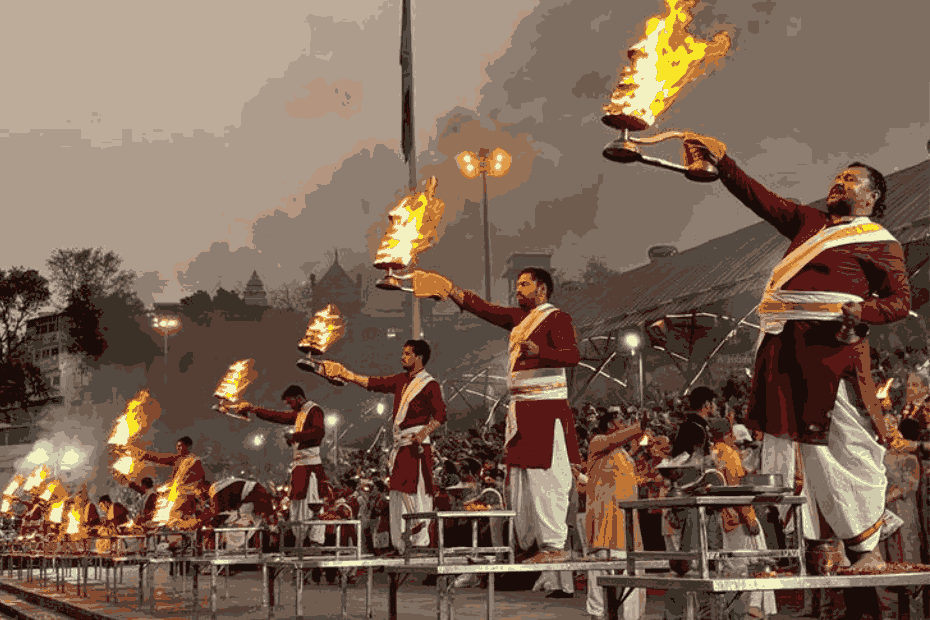
Day 1: Arrival by the Ganges
Day 2: Sunrise Yoga and Slow Living
At 5:30 AM, the city was already awake.
Yoga mats lined open terraces overlooking the Himalayas. Teachers spoke softly while students practiced sun salutations facing the rising sun.
Morning yoga in Rishikesh feels different because it isn’t treated as fitness alone. Here, yoga is a way of living.
After class, breakfast usually means:
- Herbal tea
- Fresh fruit
- Ayurvedic meals
- Homemade granola bowls
Many cafés around Tapovan encourage mindful eating and quiet conversation.
One of the best parts of the day was simply walking along the Ganga without a destination. Sadhus meditated near the riverbanks while travelers journaled in silence.
In Rishikesh, slowing down feels natural.
Day 3: Ashram Life Experience
To understand the spiritual heart of the city, spending a day in an ashram is essential.
Ashrams in Rishikesh are not luxury retreats. Most focus on discipline, meditation, seva (selfless service), and simple living.
A typical day includes:
- Early meditation
- Yoga sessions
- Vegetarian meals
- Spiritual lectures
- Silent reflection
At first, the routine can feel strict. But after a few hours, the constant mental noise begins to settle.
The most surprising lesson wasn’t flexibility or meditation techniques.
It was how powerful simplicity can be.
Day 4: Waterfalls, Caves, and Hidden Peace
Rishikesh is not only temples and yoga halls. Nature itself feels sacred here.
A short trek leads to beautiful spots like:
- Neer Garh Waterfall
- Vashishta Gufa
The cave at Vashishta Gufa is especially unforgettable. Inside, silence becomes almost physical. Meditation there feels effortless.
Many travelers spend hours by the river reading, breathing, or simply listening to birds and flowing water.
Unlike crowded tourist destinations, Rishikesh rewards people who pause.
Day 5: Adventure Meets Spirituality
One reason Rishikesh stands out is the balance between adventure and spirituality.
In the same day, you can:
- Practice meditation at sunrise
- Go white-water rafting on the Ganga
- Attend evening chanting ceremonies
Adventure sports here include:
- River rafting
- Bungee jumping
- Cliff jumping
- Trekking
The contrast is fascinating. Adrenaline during the day, complete stillness by evening.
It reflects an important yogic idea:
Life is balance, not escape.
Day 6: Conversations with Travelers and Yogis
Every café in Rishikesh contains stories.
You meet:
- Solo travelers healing from burnout
- Yoga teachers from Europe
- Spiritual seekers from South America
- Indian pilgrims on sacred journeys
Many arrive planning to stay for three days and remain for months.
One traveler told me:
“Rishikesh doesn’t give you answers. It gives you space to hear your own.”
That sentence stayed with me.
The city has a way of slowing your thoughts enough for deeper questions to emerge.
Day 7: Letting Go Before Leaving
On the final morning, I sat beside the Ganga watching sunlight touch the mountains.
Seven days earlier, my mind had been crowded with schedules, notifications, and endless distractions.
Now, things felt quieter.
Not perfect.
Not enlightened.
Just calmer.
That may be the real gift of Rishikesh.
It reminds you that peace is not something you chase. Sometimes, it appears when you stop running.
Best Time to Visit
- September to April for pleasant weather
- Avoid heavy monsoon months if trekking
What to Pack
- Comfortable loose clothing
- Reusable water bottle
- Journal
- Sandals and trekking shoes
- Light shawl for temples and ashrams
Budget Estimate
Backpackers can comfortably stay in Rishikesh on a moderate daily budget that typically includes:
- Hostel or guesthouse accommodation
- Local vegetarian meals
- Yoga classes and drop-in sessions
- Scooter or bike rentals for local travel
In addition to budget travel options, luxury wellness retreats are also widely available, offering premium stays with spa treatments, guided meditation, and holistic healing experiences.
Conclusion
A journey to Rishikesh is far more than a simple vacation itinerary filled with yoga classes, cozy cafés, and scenic river views. Instead, it becomes an experience that quietly reshapes the way you think, breathe, and move through life.
Over the course of seven days, the city gradually teaches lessons that are often difficult to learn amid the noise and distractions of everyday routines. For instance, the flowing Ganga gently reminds you to let go, while the surrounding mountains inspire stillness and reflection. At the same time, the ashrams simplify life down to what truly matters.
You may arrive searching for spirituality, adventure, healing, or perhaps just a short escape from routine. However, somewhere between the sunrise yoga sessions, evening aartis, silent caves, and meaningful conversations with strangers who eventually become friends, Rishikesh slowly begins to feel less like a destination and more like a state of mind.
Moreover, what makes this Himalayan town truly unforgettable is not only its natural beauty or spiritual heritage, but also the feeling it leaves behind long after you return home. As a result, you carry with you a slower heartbeat, a quieter mind, and a renewed connection with yourself.
In a world that constantly demands speed, productivity, and endless attention, Rishikesh offers something increasingly rare:
The permission to pause.
