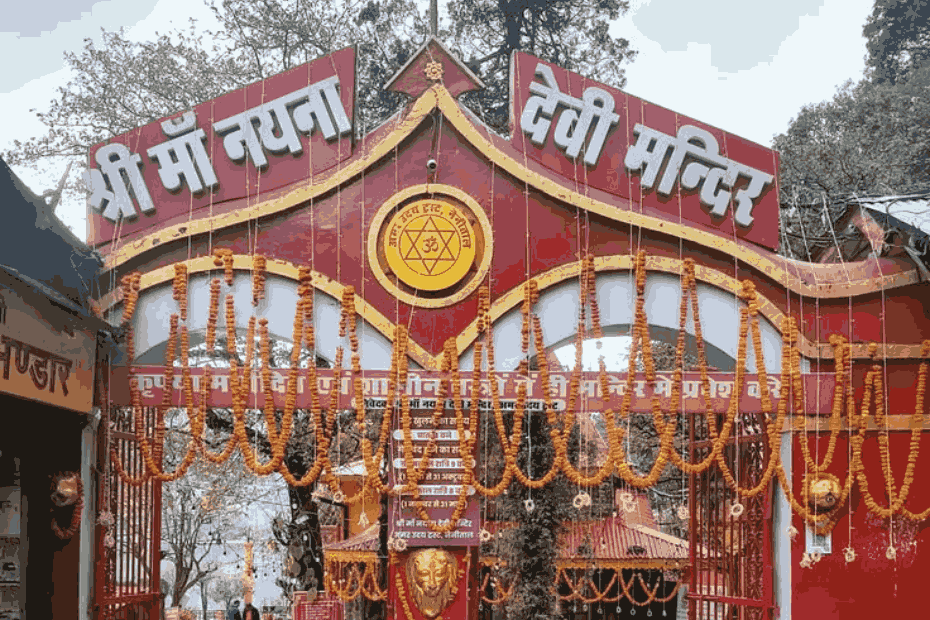
Nestled on the northern shore of the beautiful Naini Lake, Naina Devi Temple Nainital is one of the most revered Hindu shrines in Uttarakhand. Surrounded by picturesque hills and serene landscapes, the temple attracts thousands of devotees and tourists every year. Dedicated to Goddess Naina Devi, a manifestation of Goddess Shakti, this sacred temple holds immense religious, historical, and cultural significance.
Whether you are a pilgrim seeking blessings or a traveler exploring the beauty of Nainital, a visit to Naina Devi Temple Nainital offers a memorable spiritual experience.
History of Naina Devi Temple, Nainital
The history of Naina Devi Temple Nainital is closely linked to the origin and spiritual identity of Nainital itself. For centuries, devotees have worshipped Goddess Shakti at this sacred site, making it an important center of faith and pilgrimage in the region.
However, a devastating landslide struck Nainital in 1880 and destroyed the original temple. In response, local residents and devotees came together to rebuild the shrine. Their dedication not only restored the temple but also strengthened its religious significance for future generations.
Since then, Naina Devi Temple Nainital has continued to grow in prominence. As a result, thousands of pilgrims and tourists visit the temple every year to seek blessings, offer prayers, and experience the peaceful atmosphere near Naini Lake.
Today, the temple serves as a powerful symbol of faith, resilience, and community spirit. Moreover, it preserves the rich spiritual traditions of the region while welcoming visitors from across the country.
Architecture of Naina Devi Temple
The architecture of Naina Devi Temple Nainital reflects the simplicity and elegance of traditional North Indian temple design. Although not overly ornate, the temple possesses a peaceful charm that complements its natural surroundings.
The main shrine houses three sacred idols:
- Goddess Naina Devi
- Lord Ganesha
- Goddess Kali
The idol of Goddess Naina Devi is represented by two eyes, symbolizing the divine vision of the goddess. Brightly colored decorations, religious symbols, and intricate carvings enhance the spiritual ambiance of the temple.
The temple complex includes:
Main Sanctum
The sanctum houses the sacred deity and serves as the primary place of worship. Devotees gather here to offer flowers, coconuts, and prayers.
Temple Courtyard
The spacious courtyard allows visitors to sit peacefully and enjoy the spiritual atmosphere. It also offers beautiful views of the surrounding hills and Naini Lake.
Religious Bells and Sacred Symbols
Numerous bells hung around the temple are offerings from devotees whose wishes have been fulfilled. The sound of these bells adds to the divine environment of the temple.
The scenic location combined with the spiritual architecture makes Naina Devi Temple Nainital one of the most photographed religious sites in the region.
The Mythological Story of the Naina Devi Temple
The spiritual significance of Naina Devi Temple Nainital comes from the ancient Hindu legend of Goddess Sati and Lord Shiva. This powerful story makes the temple one of the most revered religious sites in Uttarakhand.
According to Hindu mythology, Goddess Sati, the daughter of King Daksha, chose to sacrifice herself after witnessing her father’s disrespect toward Lord Shiva during a grand yajna. Heartbroken by her death, Lord Shiva lifted her body and wandered across the universe in deep sorrow.
Meanwhile, the imbalance created by Shiva’s grief threatened the cosmic order. Therefore, Lord Vishnu intervened and used his Sudarshan Chakra to separate Sati’s body into several parts. As these sacred body parts fell at different locations across the Indian subcontinent, they gave rise to the holy Shakti Peethas.
Among these sacred sites, devotees believe that Goddess Sati’s eyes, or Naina, fell at the place where Naina Devi Temple Nainital stands today. As a result, the temple became a highly revered Shakti Peeth and an important pilgrimage destination for devotees of Goddess Shakti.
Moreover, local traditions connect the origin of Naini Lake to this divine event. Because of this association, both the lake and the temple hold immense religious importance. Even today, thousands of devotees visit Naina Devi Temple Nainital to seek blessings and connect with its deep mythological heritage.
Festivals and Celebrations at Naina Devi Temple
Several religious festivals are celebrated with great devotion at Naina Devi Temple Nainital. During these occasions, the temple comes alive with prayers, devotional songs, and cultural programs.
Navratri
Navratri is the most important festival celebrated at the temple. Thousands of devotees visit during both Chaitra Navratri and Sharad Navratri to seek blessings from Goddess Naina Devi.
Special rituals, prayers, and devotional events are organized throughout the nine-day festival.
Nanda Devi Mahotsav
The famous Nanda Devi Mahotsav is another significant celebration in Nainital. The festival honors Goddess Nanda Devi and showcases the region’s rich cultural traditions.
Traditional processions, folk music performances, and religious ceremonies attract large numbers of devotees and tourists.
Durga Puja
Durga Puja is celebrated with enthusiasm at Naina Devi Temple Nainital, featuring special worship ceremonies dedicated to the goddess.
Diwali
The temple is beautifully illuminated during Diwali. Devotees gather to offer prayers and participate in festive celebrations.
These festivals provide visitors with a unique opportunity to experience the spiritual and cultural heritage of Nainital.
Best Time to Visit and Timings
Best Time to Visit Naina Devi Temple Nainital
The temple can be visited throughout the year, but certain seasons offer a more comfortable experience.
Summer (March to June)
Summer is considered the best time to visit Naina Devi Temple Nainital. Pleasant weather and clear skies make sightseeing enjoyable.
Temperature Range:
- 10°C to 27°C
Monsoon (July to September)
The surrounding hills become lush and green during the monsoon season. However, occasional landslides and heavy rainfall may affect travel plans.
Winter (October to February)
Winter offers stunning views of the hills and occasional snowfall. Visitors who enjoy cold weather often prefer this season.
Temperature Range:
- 0°C to 15°C
Temple Timings
- Opening Time: 6:00 AM
- Closing Time: 10:00 PM
Timings may vary during festivals and special religious occasions.
How to Reach Naina Devi Temple
Reaching Naina Devi Temple Nainital is convenient due to the town’s excellent road connectivity.
By Air
The nearest airport is Pantnagar Airport, located approximately 70 kilometers from Nainital.
Taxis and private vehicles are readily available from the airport to the temple.
By Train
The nearest railway station is Kathgodam Railway Station, situated about 35 kilometers from Nainital.
Regular taxis and buses connect Kathgodam to Nainital.
By Road
Nainital enjoys excellent road connectivity with major cities such as:
- Delhi
- Dehradun
- Haldwani
- Bareilly
Government and private buses operate regularly to Nainital.
Local Transportation
Once in Nainital, visitors can easily reach Naina Devi Temple Nainital by:
- Walking from Mall Road
- Auto-rickshaws
- Local taxis
- Shared cabs
The temple is located near Naini Lake, making it easily accessible from most parts of the town.
Conclusion
In conclusion, Naina Devi Temple Nainital stands as one of the most sacred and iconic religious destinations in Uttarakhand. Not only does it hold immense spiritual importance as a revered Shakti Peeth, but it also captivates visitors with its rich history, fascinating mythology, picturesque lakeside setting, and vibrant cultural celebrations.
Moreover, the temple offers a unique blend of faith, heritage, and natural beauty, making it a must-visit destination for both pilgrims and travelers. Whether you come to seek the blessings of Goddess Naina Devi, enjoy the serene views of Naini Lake, or learn about the region’s cultural traditions, the experience is both meaningful and memorable.
Above all, Naina Devi Temple Nainital provides a peaceful retreat where spirituality and nature come together beautifully. As a result, every visit leaves devotees and tourists with a deeper appreciation for the temple’s timeless charm and religious significance.
