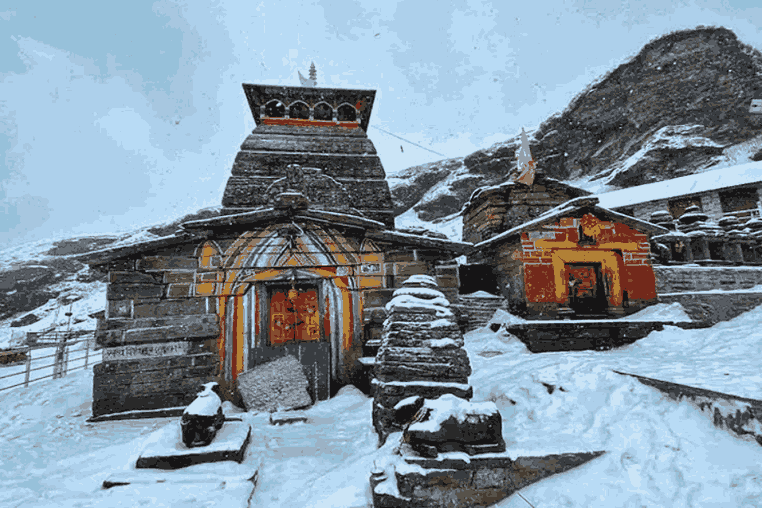
There are some places in the mountains that feel different the moment you arrive—and Tungnath Temple is one of them. Perched at an altitude of around 3,680 meters (12,073 feet) in the Garhwal Himalayas, it is not only a sacred pilgrimage site but also a rewarding trekking destination.
Located in the serene landscapes of Chopta Valley, Tungnath is widely known as the highest Shiva temple in the world and an important part of the Panch Kedar circuit. The journey to the temple involves a short yet scenic trek of about 3.5 km from Chopta, offering breathtaking views of peaks like Nanda Devi, Trishul, and Chaukhamba.
What truly makes Tungnath unique is how dramatically the experience changes with each season. From snow-covered trails in winter to lush green meadows in summer and crystal-clear mountain views after monsoon, every time of the year offers a completely different perspective.
Best Time to Visit Tungnath Temple
Summer (April to June): The Perfect Time for Most Travelers
Summer is widely considered the best time to visit Tungnath Temple, especially for first-time travelers and beginners.
During this season, the region slowly comes back to life after harsh winter conditions. The snow begins to melt, revealing lush green meadows and clear trekking paths. The weather remains pleasant, with temperatures ranging between 10°C to 20°C, making it comfortable for both trekking and temple visits.
The short trek from Chopta Valley to Tungnath becomes easier and more enjoyable. You’ll be surrounded by fresh mountain air, blooming rhododendrons, and stunning views of Himalayan peaks like Nanda Devi and Chaukhamba.
Another important reason why summer is ideal is that the temple reopens around April/May (Akshaya Tritiya), allowing pilgrims to visit and seek blessings.
This is the season when Tungnath offers the perfect balance—accessible trails, clear views, and a peaceful spiritual atmosphere.
However, since it is the peak season, you may find slightly more crowds, especially in May and June. Starting your trek early in the morning can help you enjoy a quieter and more serene experience.
Monsoon (July to September): Beauty with a Bit of Risk
Monsoon brings a dramatic transformation to Tungnath Temple and the surrounding Chopta Valley. The dry trails turn vibrant green, clouds drift through the valleys, and the entire landscape feels fresh and alive.
One of the biggest advantages of visiting during this time is the peace and solitude. Compared to the busy summer months, the crowd is much lower, allowing you to enjoy a quieter and more personal connection with nature.
But monsoon also comes with challenges.
Frequent rainfall can make the trekking route slippery and difficult to navigate. There is also a higher risk of landslides and road blockages, especially in hilly areas. Additionally, thick fog and clouds may reduce visibility, so you might not always get clear Himalayan views.
This season is undeniably beautiful—but it requires patience, flexibility, and caution.
If you’re a traveler who enjoys misty landscapes, fewer crowds, and doesn’t mind a bit of unpredictability, monsoon can still offer a unique and memorable experience. Just make sure to check weather conditions, travel safely, and plan with extra time in hand.
Winter (October to March): Snow, Silence & Spiritual Calm
Winter transforms Tungnath Temple into a completely different world—quiet, snow-covered, and deeply peaceful. As temperatures drop and snowfall increases, the entire region around Chopta Valley gets blanketed in white, creating a magical Himalayan landscape.
However, this beauty comes with limitations.
Due to heavy snowfall, the temple remains closed during winter, and the deity is shifted to Makku Math Temple for पूजा and darshan. The trekking route becomes more challenging, often covered in thick snow, and may require proper gear, guidance, and good physical fitness.
For adventure seekers and snow lovers, this is the most exciting time. The trek turns into a snow trail, and reaching higher points like Chandrashila feels incredibly rewarding.
Winter in Tungnath is not about comfort—it’s about raw beauty, silence, and a deeper connection with nature.
If you’re prepared for cold weather and looking for a unique, less crowded Himalayan experience, winter can be truly unforgettable.
Trek & Travel Tips for Tungnath Temple
Planning your trek properly can make your journey to Tungnath smooth, safe, and truly enjoyable. While the trek is short, the mountain conditions can change quickly, so a little preparation goes a long way.
- Trek Distance: The trek is around 3.5 km from Chopta Valley, making it one of the easiest Himalayan treks for beginners.
- Start Early: Begin your trek early in the morning to enjoy clear views, peaceful surroundings, and avoid crowds.
- Carry Warm Clothes: Even in summer, the weather can change suddenly, especially at higher altitudes. A light jacket is always useful.
- Wear Proper Shoes: Comfortable and sturdy trekking shoes with good grip are essential, especially during monsoon or winter.
- Stay Hydrated: Carry enough water and take short breaks to maintain your energy throughout the climb.
A simple tip: don’t rush the trek. Walk slowly, breathe in the fresh mountain air, and enjoy every step of the journey.
Temple Opening & Closing Time of Tungnath Temple
Planning your visit to Tungnath Temple requires knowing its seasonal schedule, as the temple remains open only for a few months each year due to heavy snowfall in winter.
- Opening Time: The temple usually opens in April or May, on the auspicious occasion of Akshaya Tritiya, marking the start of the pilgrimage season.
- Closing Time: It closes in October or November, around the time of Diwali, as winter begins in the region.
- Winter Stay of Deity: During winter, the idol of Lord Shiva is shifted to Makku Math Temple, where prayers and rituals continue until the temple reopens.
This seasonal tradition reflects the harmony between spirituality and nature in the Himalayas, where even worship follows the rhythm of the changing seasons.
Before planning your trip, it’s always recommended to check the exact opening dates, as they may vary slightly each year based on the Hindu calendar.
