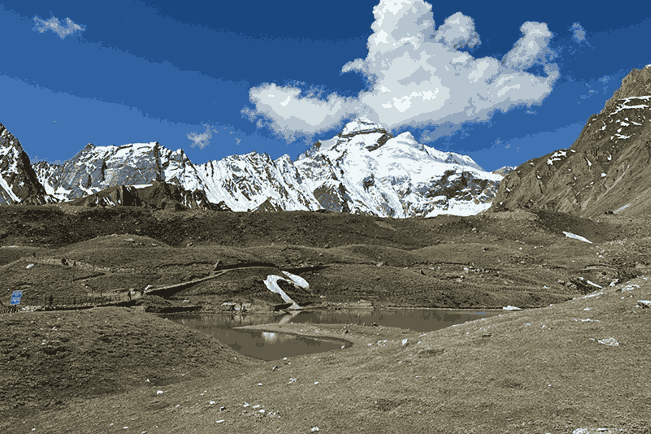
Route Overview — From Delhi to Adi Kailash
- Starting point in Delhi: Delhi (ISBT Kashmere Gate / Railway Station / Personal Vehicle)
- Key stops along the route: Haldwani → Kathgodam → Almora → Pithoragarh → Dharchula → Gunji → Jolingkong (Adi Kailash Base)
Step-by-Step Route
Day 1: Delhi → Haldwani/Kathgodam (~300 km)
The journey begins with a smooth highway drive from Delhi to Haldwani or Kathgodam. Many travelers also prefer taking a train to Kathgodam to avoid long driving hours.
Day 2: Haldwani → Pithoragarh → Dharchula (~280 km)
This is where the real mountain journey begins. You will pass through scenic hill towns like Almora and Pithoragarh. The roads are winding, but the views are breathtaking.
Day 3: Dharchula → Gunji (~70 km)
Dharchula is an important stop because you must complete your Inner Line Permit (ILP) here. After that, the journey continues along the Kali River towards Gunji, a quiet high-altitude village.
Day 4: Gunji → Jolingkong (~45 km) + Trek (3–4 km)
From Gunji, you travel by 4WD vehicle to Jolingkong. From there, a short and easy trek takes you to:
- Adi Kailash Temple
- Gauri Kund (best viewpoint)
- Parvati Sarovar
Optional: Visit Om Parvat (Nabhidhang) from Gunji for the natural ॐ symbol view.
Distance Details — How Far is the Journey?
- Total distance: Approximately 650–700 km (Delhi to Adi Kailash)
- Total duration: 3 to 4 days (one way)
Distance Breakdown
| Route Segment | Distance |
|---|---|
| Delhi → Haldwani | ~300 km |
| Haldwani → Dharchula | ~280 km |
| Dharchula → Gunji | ~70 km |
| Gunji → Jolingkong | ~45 km |
| Trek to Adi Kailash | 3–4 km |
Important: In the mountains, time matters more than distance due to narrow roads, weather changes, and terrain conditions.
Altitude — What You Should Know
- Gunji: ~3,200 meters
- Jolingkong: ~4,400 meters
- Adi Kailash Peak: ~6,310 meters
As you go higher, oxygen levels decrease. You may feel tired, slow, or slightly uncomfortable. This is normal, but you must take care.
Spend time in Gunji to acclimatize and avoid rushing.
What to Expect on the Journey
This journey is a mix of adventure and peace.
- Beautiful mountain roads with river views
- Remote villages like Gunji and Kutti
- Snow-covered peaks and open landscapes
- Limited crowds — peaceful environment
- Rough roads in some stretches (especially after Dharchula)
You may face challenges like long drives, basic facilities, and changing weather — but the natural beauty and calmness make everything worth it.
Best Time to Travel
May to June — Ideal for Comfortable Travel
This is one of the best times to visit Adi Kailash. The weather is pleasant, with moderate temperatures and clear skies. Snow starts melting, and the valleys become green and lively. Roads are more accessible, making travel easier for families and first-time visitors.
Best for: Comfortable journey, greenery, and smooth travel
July to August — Monsoon
During this time, heavy rainfall affects the region. Landslides, roadblocks, and slippery routes are common, which can make travel risky and unpredictable. Visibility is also poor due to clouds and rain.
Best to avoid due to safety concerns
September to October — Best for Clear Views
This is considered the best season overall. After the monsoon, the weather becomes clear and fresh. The skies are blue, and mountain views are at their best. This is also the perfect time for photography and peaceful travel.
Best for: Clear views, photography, and calm weather
November to April — Winter (Not Accessible)
During winter, the region receives heavy snowfall. Roads are blocked, and temperatures drop very low. Most routes to Adi Kailash remain closed during this time.
Not suitable for travel
Travel Tips — Make Your Journey Easy
Important Travel Tips
- Get your Inner Line Permit (ILP) from Dharchula (mandatory)
- Carry valid ID proof and photos
- Use 4WD vehicles (Bolero/Camper) for mountain roads
- Carry enough cash (ATMs are limited)
- Pack warm clothes, gloves, and jackets
- Drink water and walk slowly to avoid altitude sickness
- Start early in the morning for safer travel
- Expect limited mobile network
- Carry medicines and a basic first aid kit
- Respect local culture and environment
What to Pack
- Warm clothes (jackets, thermals, gloves)
- Comfortable trekking shoes
- Raincoat or poncho
- Water bottles and snacks
- Medicines and first aid
- Power bank and torch
- Sunglasses and sunscreen
Good packing makes your journey safe and comfortable.
