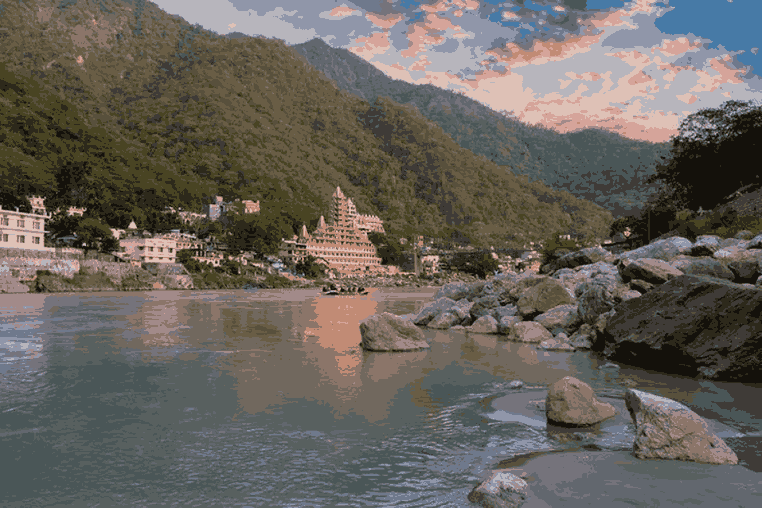
Imagine starting your day in Mussoorie — the “Queen of Hill Stations” — with a cup of hot chai and panoramic views of the Doon Valley spread out below you like a painting. And imagine ending it in Rishikesh, sitting on the banks of the Ganga as the evening aarti fills the air with golden light and the sound of bells.
That is exactly the journey this road trip offers. And the best part? Getting from one to the other is a genuinely enjoyable experience in itself.
Mussoorie sits at an altitude of 2,005 metres in the Garhwal Hills of Uttarakhand, famous for its colonial architecture, Mall Road, pleasant weather, and sweeping views of the Himalayas. It has been drawing visitors since the British era and has never once run out of charm.
Rishikesh, just a couple of hours away, could not be more different in character — and that contrast is part of what makes this route so interesting. Where Mussoorie is breezy and touristy and fun, Rishikesh is spiritual and adventurous and alive on the banks of the Ganga. It is the yoga capital of the world, the gateway to the Char Dham, and one of India’s premier adventure sports destinations.
Together, they make a perfect pairing for a weekend trip or part of a longer Uttarakhand itinerary. And the road between them passes through some beautiful hill country that deserves its own mention.
Distance — How Far is Mussoorie from Rishikesh?
The straight-line (aerial) distance between Mussoorie and Rishikesh is approximately 55 to 60 km.
By road, however, the distance stretches to approximately 80 to 85 km, depending on which route you take. Mountain roads do not go in straight lines — they curve and wind down hillsides, through forest sections, and along river valleys. And honestly, that is a large part of the charm.
| Route Type | Distance |
|---|---|
| Straight line (aerial) | ~55–60 km |
| Via Dehradun (most common road route) | ~80–85 km |
| Direct hill road (via Kempty Road / Barkot route) | ~75–80 km |
Route Options — How to Get There
There are two main ways to drive from Mussoorie to Rishikesh. Both are good — your choice depends on whether you want speed and convenience, or scenic beauty and a more adventurous mountain drive.
Route 1 — Via Dehradun (Most Popular and Recommended)
Mussoorie → Dehradun → Rishikesh
This is the route that most drivers, taxi services, and bus routes follow. It is the most reliable, well-maintained, and predictable of the two options.
How it works:
You begin by descending from Mussoorie toward Dehradun — a journey of about 30 km on the main Mussoorie-Dehradun road (also called the Rajpur Road or Library Road route). This descent takes you through the famous Doon Valley, and if you have never driven down from Mussoorie before, the views on the way down are genuinely lovely.
Once you hit Dehradun, you navigate through the city — typically 20 to 30 minutes depending on traffic — and pick up the Haridwar -Rishikesh Road (National Highway 7 / NH-58) heading toward Rishikesh.
From Dehradun, Rishikesh is approximately 45 to 50 km, a drive of about 45 minutes to 1 hour on this well-maintained highway.
Route summary:
Mussoorie → Kempty Fall Road / Library Road → Dehradun → Doiwala → Rishikesh
Distance: ~82 to 85 km Road quality: Good to excellent Suitable for: All vehicle types, first-time drivers on this route, night travel
Route 2 — The Direct Hill Road (More Scenic, Less Travelled)
Mussoorie → Kempty Fall → Barkot → Rishikesh
For travellers who are comfortable with mountain roads and want to avoid Dehradun entirely, there is a more direct hill route that winds through forested sections of the Garhwal Hills. This route keeps you in the mountains longer and passes through some genuinely beautiful terrain.
You drive from Mussoorie toward Kempty Fall (one of Mussoorie’s famous waterfalls) and then continue on mountain roads toward Barkot and eventually down into Rishikesh from the north side.
Important note: This route has narrower roads in sections, is not as well-maintained as the Dehradun highway, and requires a confident driver familiar with mountain driving. Do not attempt this at night or during or after heavy rain.
Distance: ~75 to 80 km Road quality: Variable — good in sections, rough in others Suitable for: Experienced mountain drivers, daytime only, 4WD or high-clearance vehicles recommended
For most travellers, Route 1 via Dehradun is the better choice. It is safe, comfortable, faster, and gives you the option to stop in Dehradun briefly if you wish.
Travel Time — How Long Does the Journey Take?
On a typical day with normal traffic conditions:
| Route | Estimated Time |
|---|---|
| Via Dehradun | 2.5 to 3.5 hours |
| Direct hill road | 2.5 to 3 hours |
The time varies significantly depending on:
Traffic in Dehradun: Dehradun is a growing city with real rush-hour congestion, particularly between 8 to 10 AM and 5 to 7 PM. If you are passing through the city during these times, add 30 to 45 minutes to your estimate.
Your driving speed: Mountain roads on the Mussoorie descent require slow, careful driving — especially with hairpin bends in sections. This is not the place to rush.
Stops along the way: If you plan to stop at Kempty Fall, a tea stall in the hills, or anywhere in Dehradun for fuel or food, budget additional time accordingly.
Weekends vs. weekdays: Both Mussoorie and Rishikesh are popular weekend destinations from Delhi. On Saturday mornings and Sunday afternoons, the roads can be significantly more congested. If you can, travel mid-week.
Practical time estimate: Plan for 3 to 4 hours from door to door. This gives you buffer for traffic, a brief stop, and the beautiful, unhurried pace that mountain road travel genuinely deserves.
Stops Worth Making Along the Way
This road trip is short enough that you could drive it straight through — but why would you want to?
Kempty Fall
About 13 km from Mussoorie on the descent, Kempty Fall is one of the most visited waterfalls in Uttarakhand. It is at its most impressive after the monsoon (August to October) when the volume of water is at its peak. Morning visits are quieter than afternoons.
Dehradun City
If you have an hour to spare, Dehradun is worth a brief stop. The city has great food options, a lively market area, and the famous Forest Research Institute (FRI) — one of the most beautiful colonial-era buildings in India, set in extensive grounds. Even a drive past it is worthwhile.
Clock Tower Area, Dehradun
A quick chai and snack stop near the Clock Tower in central Dehradun is a good way to break the journey and get some local street food before the final leg to Rishikesh.
Transport Options — How to Make This Journey
By Private Car or Self-Drive
This is the most flexible option and the one most families and groups prefer. The route is well-signed, Google Maps works well for most of the journey, and you can stop wherever you like.
Tips for self-drive:
- Fill up petrol in Mussoorie or Dehradun — do not rely on finding fuel easily between the two
- Download an offline map before departure — connectivity can be patchy in some hill sections
- Keep your headlights on even during daytime driving on mountain roads — visibility for oncoming vehicles improves significantly
By Taxi
Taxis are available from Mussoorie’s taxi stand for the journey to Rishikesh. Negotiate the fare before you get in and confirm whether it includes waiting time if you want a stop at Kempty Fall. A one-way trip in a standard taxi typically costs between ₹1,200 to ₹1,800 depending on the vehicle type and season.
By Bus
Government buses (GMOU/UTTC) connect Mussoorie and Rishikesh via Dehradun, though usually requiring a change at Dehradun bus stand. The total journey by bus — including the change — typically takes 3 to 4 hours. This is the most budget-friendly option.
By Shared Jeep/Sumo
From Mussoorie, you can take a shared jeep or taxi down to Dehradun and then pick up another shared vehicle onward to Rishikesh. This is affordable and an authentic local travel experience, though it requires more patience and flexibility with timing.
Travel Tips — Making the Most of This Journey
Plan Your Departure Time Wisely
The single biggest factor affecting your journey time is Dehradun traffic. Leave Mussoorie before 8 AM to pass through Dehradun before morning rush hour. Alternatively, leave after 10 AM and stop for a leisurely breakfast before the Dehradun approach.
Go Slow on the Descent
The Mussoorie to Dehradun descent has some sharp hairpin turns — particularly on the Kempty Road route. First-time drivers on this road should go particularly slowly and use horn on blind turns as per mountain driving etiquette.
Avoid the Journey on Weekends and Long Holidays
Both Mussoorie and Rishikesh are extremely popular with Delhi and NCR visitors on weekends. Friday evening and Saturday morning traffic toward Mussoorie (and Sunday evening traffic returning) can mean serious delays. Midweek travel is significantly smoother.
Pack Layers
Mussoorie at 2,005 metres can be quite cool even in summer mornings. Rishikesh in the valley is noticeably warmer. You will likely be shedding layers as you descend — pack accordingly rather than dressing for one climate.
Keep Cash Handy
While petrol stations, toll booths (if any on your route), and roadside stalls increasingly accept digital payments, having ₹1,000 to ₹2,000 in cash is always wise on mountain routes where connectivity can be unreliable.
Check Weather Before the Hill Road
If you are taking the direct hill road (Route 2), check the weather forecast first. Mountain road driving after heavy rain increases the risk of landslides and makes slippery surfaces genuinely dangerous. The Dehradun route is safer in wet conditions.
Arrive in Rishikesh Before Sunset
If you are driving into Rishikesh for the first time, arriving before sunset means you can navigate the narrow streets around Laxman Jhula and Ram Jhula in daylight. The evening aarti on the ghats typically begins around 6 PM and is something you genuinely should not miss on your first night.
Book Your Rishikesh Accommodation Before You Leave
Rishikesh — especially the Laxman Jhula and Tapovan areas — fills up fast on weekends and during the Char Dham Yatra season (April to June). Book your guesthouse or ashram stay before you depart from Mussoorie to avoid the scramble on arrival.
Conclusion — A Short Drive Worth Savouring
The journey from Mussoorie to Rishikesh is, in the best possible way, more than just a drive from A to B. It is a transition — from the cool, breezy hilltop world of Mussoorie down through the green Doon Valley and into the spiritual, adventurous, river-side energy of Rishikesh.
At roughly 80 km and 3 hours, it is short enough to be easy. But take your time with it. Stop at Kempty Fall in the morning light. Have chai in Dehradun. Drive slowly down the mountain curves and let the valley open up around you.
And when you finally pull into Rishikesh and the Ganga appears between the buildings — pale blue-green and fast-moving and utterly beautiful — you will understand why this part of Uttarakhand has been drawing travellers for so many generations.
The road between these two places is short. The experience of making the journey is something else entirely.
