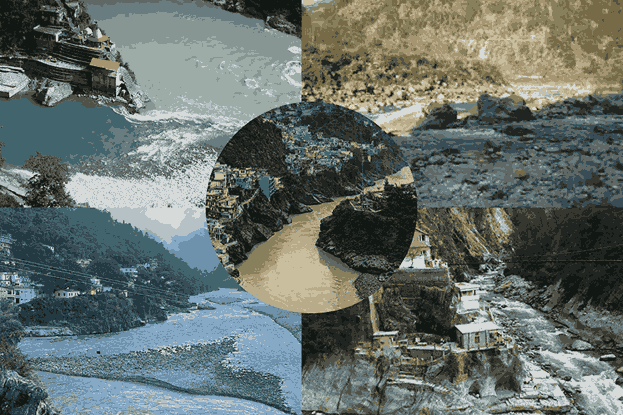
Nestled among the towering Himalayas of Uttarakhand, the Panch Prayag — meaning “five confluences” in Sanskrit — represent one of India’s most revered pilgrimage circuits. These are five sacred points where tributaries merge into the Alaknanda River, ultimately giving birth to the holy Ganga at Devprayag. For devout Hindus, each Prayag (confluence) is not merely a geographical phenomenon but a divine meeting point — a tirtha — where the spiritual and the elemental intertwine.
The five confluences, from the highest to the lowest in elevation, are: Vishnuprayag, Nandprayag, Karnaprayag, Rudraprayag, and Devprayag. Together, they form an essential part of the Char Dham Yatra route and attract thousands of pilgrims and nature lovers every year.
The Five Sacred Confluences
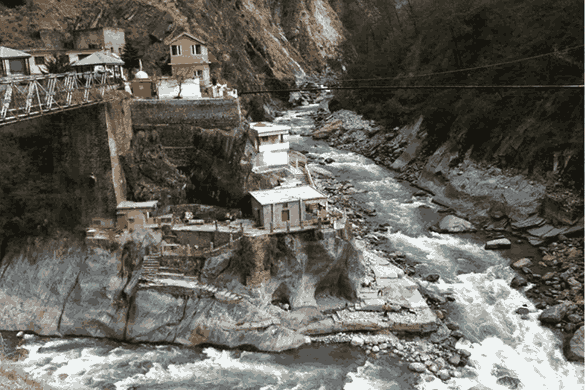
1. Vishnuprayag — The Highest Confluence
Elevation: ~1,372 metres | Rivers: Dhauliganga meets Alaknanda
Perched at the gateway to Joshimath, Vishnuprayag is the highest of the five confluences. It is here that the fierce Dhauliganga descends from Niti Pass to meet the Alaknanda. The ancient Vishnu Temple standing at the confluence is said to be the spot where the sage Narada meditated and received a vision of Lord Vishnu — lending the site its celestial name. The roar of the merging rivers and the pristine mountain backdrop make Vishnuprayag a spiritually stirring and visually dramatic destination.
2. Nandprayag — The Quiet Confluence
Elevation: ~914 metres | Rivers: Nandakini meets Alaknanda
Named after the demon king Nand — or, as some traditions hold, after Nanda, the foster father of Lord Krishna — Nandprayag is the most tranquil of the Panch Prayag. The Nandakini River, originating from the Nanda Ghunti glacier, gently joins the Alaknanda here. A small but vibrant Gopalji Temple graces the banks. Unlike its more crowded counterparts, Nandprayag offers pilgrims a rare moment of quietude and unhurried reflection amidst lush greenery.
3. Karnaprayag — The Mahabharata Confluence
Elevation: ~788 metres | Rivers: Pindar meets Alaknanda
Rich in mythological heritage, Karnaprayag is believed to be the place where Karna — the great warrior of the Mahabharata — performed tapasya (penance) and received his legendary armour and earrings (kavacha and kundala) from his father, the Sun God. The Uma Devi Temple and the Karna Temple are important shrines here. Karnaprayag also serves as a commercial hub for pilgrims heading toward Badrinath and Kedarnath, making it a natural stopover during the Panch Prayag Yatra.
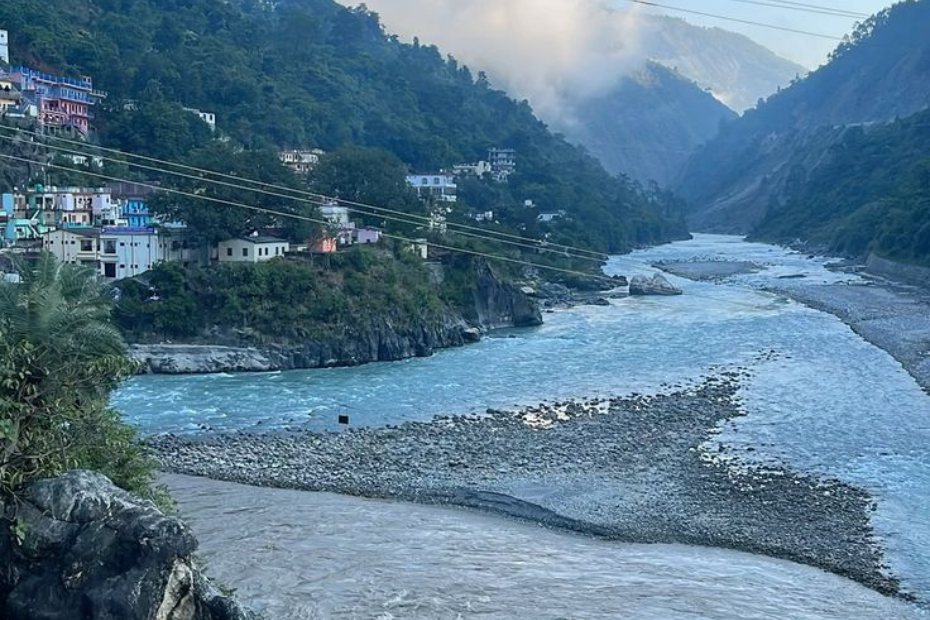
4. Rudraprayag — The Confluence of Shiva
Elevation: ~610 metres | Rivers: Mandakini meets Alaknanda
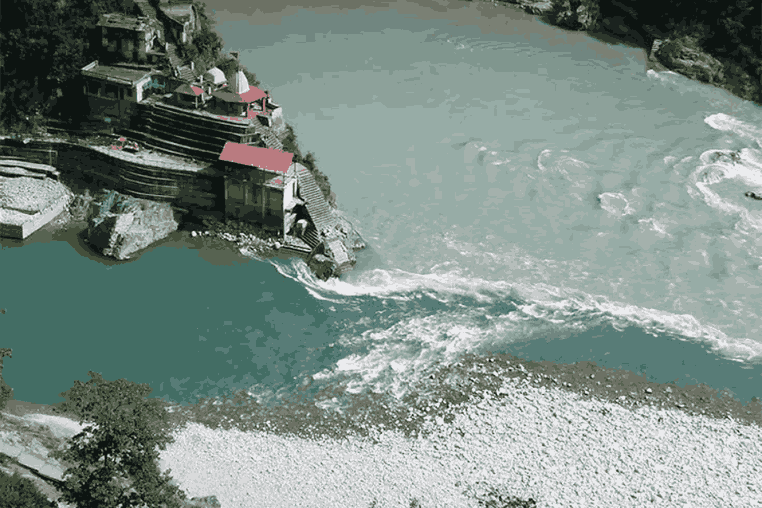
Rudraprayag, named after Lord Rudra — a fierce form of Shiva — is arguably the most famous of the Panch Prayag. The Mandakini River, descending from Kedarnath, joins the Alaknanda here in a dramatic display of sacred waters. Two prominent temples — the Rudranath Temple (dedicated to Shiva) and the Chamunda Devi Temple — draw large numbers of devotees. Rudraprayag is also the starting point for those on the Kedarnath pilgrimage route and gained further fame through Jim Corbett’s account of the legendary man-eating leopard of the region.
Select 85 more words to run Humanizer.
5. Devprayag — The Birthplace of the Ganga
Elevation: ~618 metres | Rivers: Bhagirathi meets Alaknanda — the Ganga is born
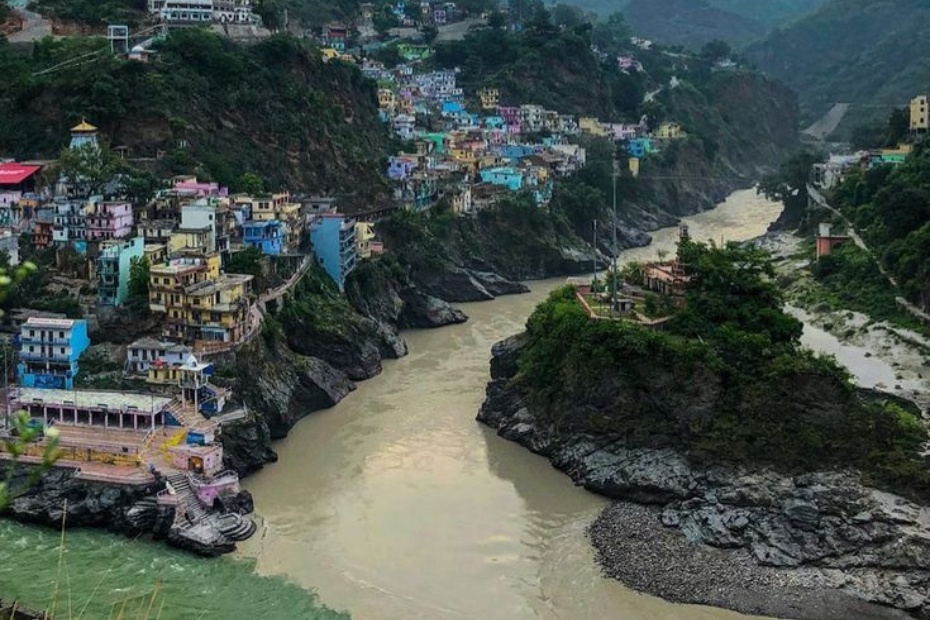
The most celebrated of all the Panch Prayag, Devprayag is where the milky-white Bhagirathi and the emerald-green Alaknanda merge to form the sacred Ganga. Watching the two distinctly coloured rivers meet and flow as one is a breathtaking and deeply moving experience. The ancient Raghunath Temple, believed to be over a thousand years old, stands as the spiritual centrepiece. According to Hindu belief, a holy dip at Devprayag washes away a lifetime of sins. No Panch Prayag Yatra is truly complete without visiting Devprayag.
The Panch Prayag Yatra Route
The traditional Panch Prayag Yatra follows the course of the Alaknanda River upstream from Devprayag. The recommended route begins in Rishikesh and proceeds as follows:
Rishikesh → Devprayag → Rudraprayag → Karnaprayag → Nandprayag → Vishnuprayag (Joshimath)
This route covers approximately 270 kilometres and can be completed in 5 to 7 days, allowing adequate time for darshan (worship), a sacred dip at each confluence, and exploration of the surrounding temples and landscapes.
Best Time to Visit Panch Prayag
The most suitable period to undertake the Panch Prayag Yatra is May to June and September to November. During these months, the weather is pleasant, the mountain roads are open, and the rivers flow with majestic clarity.
The monsoon season (July–August) should be avoided due to heavy rainfall, frequent landslides, and road closures. Winter months (December–February) bring snow and freezing temperatures, rendering higher-altitude sites like Vishnuprayag difficult to access.
How to Reach Panch Prayag
By Air: The nearest airport is Jolly Grant Airport in Dehradun (approximately 75 km from Rishikesh), with regular flights from Delhi and other major cities.
By Rail: Rishikesh Railway Station is the nearest major railhead. From Rishikesh, taxis and buses are readily available for the Yatra circuit.
By Road: Rishikesh is well connected by road from Delhi (approximately 250 km) and other cities. State-run buses (GMOU) and private taxis serve the route along NH-7 through the Alaknanda valley.
Essential Travel Tips for the Panch Prayag Yatra
- Register online through the Uttarakhand tourism portal before commencing the yatra, especially during peak pilgrimage season.
- Carry warm clothing even in summer, as temperatures drop sharply after sunset at higher altitudes.
- Respect local customs — modest attire is expected at all temple sites; footwear must be removed before entering.
- Stay hydrated and carry water purification tablets, as mountain travel is physically demanding.
- Book accommodation in advance during May–June, when demand far exceeds supply in small pilgrim towns.
- Hire a local guide for first-time visitors; they provide both navigation support and invaluable cultural context.
- Do not litter near the riverbanks — keeping the Prayag sites clean is a matter of both faith and environmental responsibility.
Conclusion
The Panch Prayag Yatra offers far more than a journey through the Himalayas — it provides a deep spiritual experience filled with devotion, mythology, and natural beauty. From the powerful confluence at Vishnuprayag to the sacred birthplace of the Ganga at Devprayag, each Prayag holds its own religious importance and unique charm. Moreover, the peaceful river valleys, ancient temples, and breathtaking mountain landscapes make the journey both spiritually uplifting and visually unforgettable.
Whether you travel as a pilgrim, a nature lover, or a cultural explorer, the Panch Prayag circuit leaves you with lasting memories and a stronger connection to the spiritual heritage of Uttarakhand. In addition, the journey allows visitors to witness the sacred union of rivers that hold immense significance in Hindu tradition. Overall, the Panch Prayag Yatra stands as a perfect blend of faith, history, and Himalayan beauty, offering a truly meaningful and once-in-a-lifetime experience.
