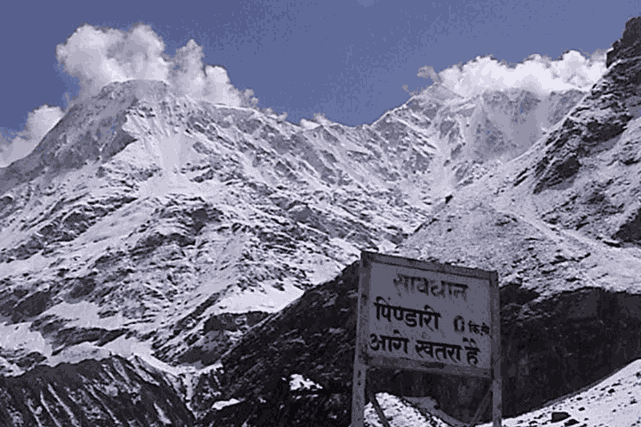
Deep in the Kumaon Himalayas of Uttarakhand lies a glacier that has been calling trekkers for over a century.
Indeed, Pindari Glacier is one of the most accessible and beautiful glaciers in all of India. Located in the Bageshwar district of the Kumaon Himalayas, the trek follows ancient mountain trails through forests, traditional villages, and alpine valleys. Eventually, it leads to the spectacular Pindari Glacier Zero Point at 3,660 metres.
What truly makes Pindari special, however, is its perfect balance. It is not an extreme mountaineering challenge; at the same time, it is not a casual walk either. Instead, it sits right in the middle — a proper Himalayan adventure that almost anyone with reasonable fitness can complete. Because of this, the locals proudly refer to it as the Soul of Kumaon.
Along the way, you will walk through dense rhododendron forests, cross rushing mountain rivers, and pass through quiet villages where life has barely changed in centuries. Finally, you will stand at the foot of a shimmering glacier surrounded by towering Himalayan peaks.
So, if you have been thinking about your first Himalayan trek, this is a wonderful place to start.
Best Time to Visit
The best time for the Pindari Glacier Trek is between mid-April to mid-June and mid-September to mid-November.
Firstly, April to June — Spring is a beautiful time to visit. The forests are in full bloom, and rhododendrons burst into red and pink flowers. During this period, the weather remains warm during the day and cool at night. Moreover, the skies are clear and mountain views are crisp. Therefore, this is the most popular season.
On the other hand, September to October — Autumn is widely considered the best season for clear Himalayan views. After the monsoon, the skies become crystal clear, offering spectacular views of peaks surrounding the Pindari Valley. Although temperatures are cooler, the air feels clean and fresh.
However, July to August — Avoid this period. Heavy monsoon rains bring landslides and road blockages. As a result, the trail becomes slippery and dangerous, and trekking is not recommended.
Similarly, November to March — Avoid this season as well. The route closes due to heavy snowfall and freezing temperatures. Consequently, trekking becomes extremely difficult and unsafe.
How to Reach Pindari Glacier
Getting to the start of this trek requires a bit of planning, but it becomes straightforward once you know the route.
Step 1 — Reach Kathgodam
First, reach Kathgodam, which is the nearest railway station, located about 215 km from the glacier. The road journey from Delhi to Kathgodam is about 300 kilometres and takes approximately 6 to 7 hours. Moreover, Kathgodam is well connected by train from Delhi, Lucknow, and other major cities.
Alternatively, the nearest airport is Pantnagar Airport, which is about 260 km away. From there, taxis are easily available from both Pantnagar and Kathgodam.
Step 2 — Kathgodam to Bageshwar
Next, from Kathgodam, take a bus or hire a taxi to Bageshwar — the main town in the district and the gateway to this trek. The journey takes about 5 to 6 hours. Along the way, you will pass through scenic mountain roads via Almora and Kausani.
Step 3 — Bageshwar to the Trek Starting Point
Finally, from Bageshwar, you can hire a local taxi to reach Loharkhet, which is approximately 30 km away. Alternatively, you can take the newer route through Kharkiya village — the last motorable point. From here, the trek to Khati village begins.
Trek Details
Route — Day by Day
The Pindari Glacier Trek follows the route: Khati – Dwali – Phurkiya – Zero Point and returns the same way. The trek usually takes 4 days of walking plus 2 travel days.
Day 1 — Arrival at Base
Drive to Loharkhet or Kharkiya.
Arrive, rest, and get used to the mountain weather.
Day 2 — Loharkhet to Dhakuri (10 km)
Start the trek through forests of oak and rhododendron.
Climb gradually to reach Dhakuri Pass.
Enjoy beautiful mountain views. Stay overnight at Dhakuri.
Day 3 — Dhakuri to Khati (12 km)
Walk downhill through forests to reach Khati village.
Meet locals and enjoy simple village life. Stay overnight at Khati.
Day 4 — Khati to Dwali (12 km)
Follow the Pindar River along the trail.
Enjoy waterfalls and forest views. Stay overnight at Dwali.
Day 5 — Dwali to Phurkiya (6 km)
Short but slightly steep trek.
The air gets colder and the trees become fewer. Stay overnight at Phurkiya.
Day 6 — Phurkiya to Zero Point and back to Dwali (16 km)
Start early and trek to Zero Point (glacier view).
Enjoy the stunning scenery.
Return to Dwali for overnight stay.
Day 7 — Return Journey
Trek back to Khati.
Then drive to Bageshwar and Kathgodam.
Difficulty Level
This trek is considered moderate difficulty and is suitable for beginners with basic fitness. Although the Pindari Glacier trek is long, it is considered easier than other glacier treks, with a moderate difficulty level. You will encounter some narrow paths and landslide-prone areas, particularly between Khati and Phurkia.
You do not need to be a professional trekker. But you should be able to walk 10 to 15 km a day comfortably. Some basic preparation — regular walking, light jogging, or stairs — for a few weeks before the trek will make a big difference.
Distance and Duration
Trek Distance: 26 km one way / 52 km round trip. Trek Duration: 4 days trekking plus 2 travel days. Most organised packages run for 7 to 8 days total including travel from Kathgodam.
Accommodation
The trail is supported by guesthouses in villages along the route. In Khati and Dwali you will find simple but comfortable guesthouses and GMVN (Garhwal Mandal Vikas Nigam) lodges. Basic rooms with beds and blankets are available. Hot food — dal, rice, roti, vegetables — is cooked fresh every day.
At Phurkiya and campsites, tented accommodation is common. Sleeping bags are essential.
Accommodation costs are very reasonable — roughly ₹300 to ₹600 per night for a basic room.
Permits and Fees
The Pindari Glacier falls within the buffer zone of the Nanda Devi Biosphere Reserve. A small entry fee is charged at the forest checkpost. Your trek operator will usually handle permits for you. If trekking independently, arrange permits at the forest department office in Bageshwar or Loharkhet.
What to Pack
Clothing
- Warm thermal inner layers (top and bottom)
- Fleece jacket or sweater
- Waterproof wind jacket
- Comfortable trekking trousers
- Woollen cap, gloves, and sun hat
- 2 to 3 pairs of woollen socks
- Comfortable, broken-in trekking shoes with ankle support
Gear
- Trekking poles (very helpful on descents)
- Backpack 40 to 50 litres
- Sleeping bag (essential — temperatures drop below zero at higher camps)
- Headtorch with extra batteries
- Sunglasses and sunscreen (SPF 50+)
- Reusable water bottle or hydration bladder
Health and Safety
- Personal first aid kit
- Basic medicines — paracetamol, antacid, anti-diarrhoeal, bandages
- Altitude sickness tablets (Diamox — consult a doctor before use)
- Lip balm and moisturiser (skin dries out fast at altitude)
- Energy snacks — nuts, chocolates, dry fruits
Things to Do Along the Trek
Watch the sunrise from Dhakuri Pass On a clear morning, the first light hitting peaks like Nanda Kot and Maiktoli turns the sky pink and gold. It is one of the finest sunrise views in the entire Kumaon region. Wake up early and step outside.
Talk to people in Khati village Khati is a living, breathing Himalayan community. The people here are warm and welcoming. Ask about their daily life, their traditions, and their stories of the mountains. You will learn more in an hour of conversation than in any guidebook.
Watch for wildlife in the forests The route traverses through the southern face of the Nanda Devi Sanctuary amidst its wilderness. Keep your eyes open for Himalayan birds, mountain goats, and if you are very lucky, the Himalayan black bear.
Walk alongside the Pindar River Much of the trail runs right beside the roaring Pindar River. The sound of glacial water rushing over rocks is constantly with you. Stop on a wooden bridge, look down, and take a moment to appreciate where you are.
Photography Every section of this trek is photogenic. The forest light in the mornings, the river reflections, the distant white peaks appearing between trees — bring a good camera and use it constantly.
Pindari Glacier — What to Expect at Zero Point
After days of walking, you finally arrive at Zero Point — the closest most trekkers get to the glacier face.
Pindari Glacier spans approximately 3.2 kilometres in length and is situated at an elevation of around 3,660 metres. It offers a mesmerising experience for nature lovers, adventure enthusiasts, and trekkers alike.
The glacier emerges between the towering peaks of Nanda Kot and Maiktoli. The glacier is the source of the Pindar River, which eventually merges with the Alaknanda River at Karnaprayag and becomes part of the sacred Ganga river system.
Standing at Zero Point, you see where the glacier ends and the river begins. The ice is blue-white and ancient. The peaks tower above on three sides. The air is very cold and very clean. Most trekkers stand there in silence for a while — it is the kind of view that makes you feel small in the most wonderful way.
One can get a spellbinding worm’s-eye view of the majestic Nanda Devi peak from Pindari Glacier.
Safety Tips
Altitude sickness The trek reaches 3,660 metres. Take the itinerary day by day. Do not rush. If you feel a headache, dizziness, or nausea — rest immediately. Do not go higher if symptoms continue. Descending is always the right answer when in doubt.
Stay hydrated Drink at least 3 to 4 litres of water per day. Dehydration is the most common problem on Himalayan treks and it makes everything worse — headaches, fatigue, and altitude sickness all get worse when you are dehydrated.
Do not trek alone Always have at least one companion or hire a local guide from Khati village. Mobile signals are almost non-existent beyond Bageshwar. In 2025, you can expect only BSNL to have reception in Pindari Valley — that too only for calling.
Respect the environment Carry all your plastic and waste back with you. Do not light fires in the forest. Stick to marked trails. This is a protected biosphere reserve and one of the most beautiful places in India — treat it accordingly.
Check the weather Always check weather conditions before departing each morning. Mountain weather can change in minutes. If it looks bad — wait.
Conclusion
The Pindari Glacier trek is the kind of journey that changes you in subtle ways rather than dramatic ones. Over seven days of walking through forests, rivers, and mountains, you begin to notice small details more clearly, worry a little less, and often feel a quiet desire to return again.
The Pindari Glacier Trek offers a rare combination of breathtaking scenery and beginner-friendly terrain, making it accessible for first-time trekkers while still feeling wild and remote enough to deliver a true Himalayan adventure.
Whether you are 25 or 65, and whether you have trekked before or not, this journey welcomes anyone who feels drawn to the mountains and wants to experience their calm beauty.
With your bag packed and boots laced, you step into an unforgettable experience, knowing that the glacier is waiting ahead.
