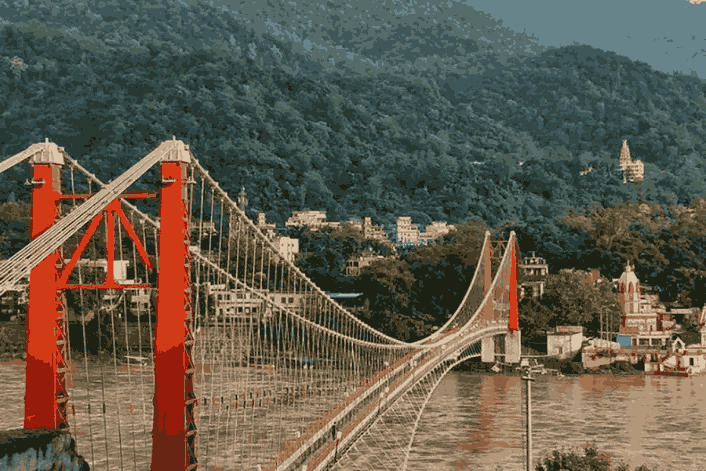
Located in the spiritual city of Rishikesh, Ram Jhula and Laxman Jhula are two famous suspension bridges across the holy River Ganga. Temples, ashrams, cafes, and beautiful hills surround these iconic landmarks, attracting tourists, pilgrims, yoga lovers, and adventure seekers throughout the year.
According to Hindu mythology, Lord Lakshman crossed the river at Laxman Jhula using a jute rope during the Ramayana era. Later, people built Ram Jhula to connect important ashrams and nearby areas. Today, both bridges attract visitors with peaceful views of the Ganga River and showcase the spiritual beauty and culture of Uttarakhand.
History of Ram Jhula & Laxman Jhula
Ram Jhula and Laxman Jhula are among the most iconic landmarks of Rishikesh and carry great spiritual, historical, and cultural importance. These famous suspension bridges across the holy River Ganga connect pilgrims, saints, local residents, and travelers from different parts of the city. As a result, they have become major symbols of Rishikesh tourism and spirituality.
Among the two, Laxman Jhula holds deeper historical and mythological significance. According to Hindu mythology, Lord Lakshman, the younger brother of Lord Rama, crossed the Ganga River at this location using a rope made of jute during the Ramayana era. Therefore, people later built a suspension bridge at the same spot to honor this belief.
In 1929, engineers constructed the present iron suspension bridge after floods damaged the earlier rope bridge. Over time, Laxman Jhula became one of the most famous tourist attractions in Rishikesh and strengthened the town’s spiritual identity.
Later, authorities built Ram Jhula to improve connectivity between important areas of Rishikesh, especially Swarg Ashram and Sivananda Ashram. Compared to Laxman Jhula, Ram Jhula is slightly larger and wider. In addition, thousands of pedestrians, saints, tourists, and local residents use the bridge every day while visiting nearby temples, ashrams, and markets.
Today, Ram Jhula and Laxman Jhula attract visitors from all over the world with their spiritual atmosphere, scenic river views, and cultural charm. Together, these bridges beautifully represent the religious heritage and peaceful beauty of Rishikesh.
Best Time to Visit Ram Jhula & Laxman Jhula Rishikesh:
The best time to visit Ram Jhula and Laxman Jhula is from September to April when the weather remains pleasant and ideal for sightseeing, temple visits, yoga sessions, and adventure activities.
During winter months from October to February, the cool breeze, clear skies, and peaceful surroundings create a perfect atmosphere for travelers. Summer months are also suitable, although afternoons can become warm.
The monsoon season from July to August brings lush greenery and beautiful river views, but heavy rainfall may occasionally affect travel plans and outdoor activities.
Early mornings and evenings are considered the best times to walk across the bridges and enjoy the scenic beauty of the Ganga River.
Things to Do at/Near Ram Jhula & Laxman Jhula:
There are plenty of exciting and spiritual experiences around Ram Jhula and Laxman Jhula that make the area one of the most vibrant parts of Rishikesh.
Walk Across the Suspension Bridges
A peaceful walk across both bridges offers panoramic views of the Ganga River, temples, mountains, and the lively streets of Rishikesh. The cool breeze and spiritual vibe create a memorable experience.
Attend Ganga Aarti
The evening Ganga Aarti at nearby ghats is one of the most beautiful spiritual experiences in Rishikesh. Devotional chants, lamps, and the sound of temple bells create a magical atmosphere.
Explore Ashrams and Temples
The area around Ram Jhula and Laxman Jhula is filled with famous ashrams and temples where visitors can meditate, practice yoga, or simply enjoy peaceful surroundings.
Popular spiritual places include:
- Parmarth Niketan
- Trayambakeshwar Temple
- Geeta Bhawan
Try River Rafting and Adventure Activities
Rishikesh is known as the adventure capital of India. Visitors can enjoy river rafting, bungee jumping, ziplining, giant swing, and camping near the river.
Enjoy Cafes and Local Markets
The bridge areas are filled with charming cafes, rooftop restaurants, yoga centers, and local shops selling spiritual items, clothes, handicrafts, and souvenirs.
Photography and Sunset Views
Both bridges provide excellent photography opportunities, especially during sunrise and sunset when the golden light reflects beautifully on the Ganga River.
How to Reach Ram Jhula & Laxman Jhula:
Reaching Ram Jhula and Laxman Jhula is quite easy as Rishikesh is well connected by road, rail, and air.
By Road
Rishikesh has excellent road connectivity with major cities like Delhi, Haridwar, Dehradun, and Chandigarh. Regular buses, taxis, and private vehicles are available.
- Delhi to Rishikesh distance: approximately 240 km
- Haridwar to Rishikesh distance: approximately 25 km
By Train
The nearest railway station is Rishikesh Railway Station, though many travelers prefer arriving at Haridwar Railway Station due to better train connectivity.
From the station, taxis and auto-rickshaws are easily available to reach Ram Jhula and Laxman Jhula.
By Air
The nearest airport is Jolly Grant Airport, located around 20–25 km from Rishikesh. Taxis are available from the airport to the bridge areas.
Local Transport
Auto-rickshaws, scooters, local taxis, and walking are the most convenient ways to explore the nearby attractions.
Best Places to Visit Near Ram Jhula & Laxman Jhula (within 50 km):
Several famous tourist attractions are located near Ram Jhula and Laxman Jhula, making Rishikesh a perfect destination for spiritual, adventure, and nature tourism.
The Beatles Ashram
Famous for its connection with the legendary Beatles band, this abandoned ashram is known for meditation halls, graffiti art, and peaceful forest surroundings.
Neelkanth Mahadev Temple
Located amidst forested hills, this sacred Shiva temple is one of the most important pilgrimage sites near Rishikesh.
Triveni Ghat
One of the holiest ghats in Rishikesh, Triveni Ghat is famous for evening Ganga Aarti and spiritual rituals.
Rajaji National Park
Nature lovers can enjoy wildlife safaris and spot elephants, deer, leopards, and various bird species in this beautiful national park.
Shivpuri
A popular destination for river rafting, camping, cliff jumping, and adventure sports along the Ganga River.
Vashishta Gufa
This peaceful cave is believed to be the meditation site of Sage Vashishta and offers a calm spiritual atmosphere away from the city crowds.
Conclusion
Overall, Ram Jhula and Laxman Jhula are among the most iconic attractions of Rishikesh, offering a perfect blend of spirituality, natural beauty, adventure, and cultural charm. Whether you want to enjoy peaceful walks by the Ganga, attend the mesmerizing Ganga Aarti, explore yoga ashrams, or experience thrilling river rafting, these famous suspension bridges offer something special for every traveler.
Moreover, the peaceful surroundings, scenic river views, and spiritual atmosphere make these landmarks even more memorable for visitors. Therefore, a visit to Ram Jhula and Laxman Jhula is not just a sightseeing experience but also a journey into the spiritual heart of Uttarakhand that leaves travelers refreshed, inspired, and connected to the beauty of Rishikesh.
