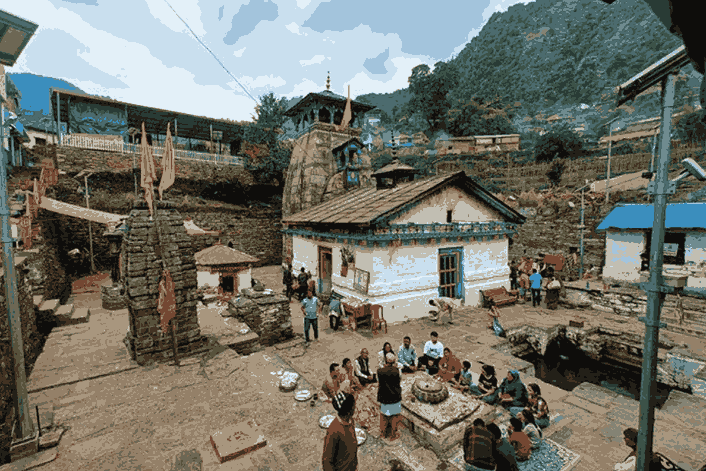
Nestled amidst the picturesque mountains of the Garhwal Himalayas in Uttarakhand, Triyuginarayan Temple stands as one of India’s most sacred and fascinating pilgrimage destinations. Moreover, devotees and pilgrims recognize it as the divine wedding venue of Lord Shiva and Goddess Parvati. As a result, the temple attracts devotees, history enthusiasts, and travelers seeking spiritual peace and natural beauty throughout the year.
At an altitude of approximately 1,980 meters in the Rudraprayag district, Triyuginarayan Temple offers breathtaking Himalayan views, deep mythological significance, and a peaceful atmosphere away from crowded tourist destinations. In addition, its serene surroundings create an ideal setting for meditation and reflection. Whether you’re on a Kedarnath pilgrimage or exploring Uttarakhand’s hidden gems, you will find a visit to Triyuginarayan Temple truly unforgettable.
Overview of Triyuginarayan Temple Uttarakhand
The name “Triyuginarayan” translates to “The Lord of Three Yugas.” According to legend, the sacred fire lit during the celestial wedding has been burning continuously through three ages (Yugas), making the temple one of the most spiritually significant sites in Uttarakhand.
Surrounded by snow-capped peaks, dense forests, and serene valleys, the temple offers both religious importance and stunning natural beauty.
History and Mythological Significance
The history of Triyuginarayan Temple is deeply rooted in Hindu mythology. According to ancient scriptures, Goddess Parvati performed intense penance to win Lord Shiva as her husband. Pleased with her devotion, Lord Shiva agreed to marry her.
The wedding ceremony took place at Triyuginarayan in the presence of numerous gods and sages. Lord Vishnu, the brother of Parvati according to local traditions, played the role of her guardian during the marriage ceremony, while Lord Brahma officiated the sacred rituals.
The most remarkable aspect of this divine wedding is the Akhand Dhuni (eternal fire), which is believed to have witnessed the celestial marriage and continues to burn even today. Devotees consider this sacred flame a symbol of eternal love and divine blessings.
The temple finds mention in several ancient Hindu texts and is regarded as one of the holiest destinations in the Kedarnath region.
Temple Architecture and Unique Features
The architecture of Triyuginarayan Temple closely resembles the famous Kedarnath Temple. Built using large stone blocks, the temple reflects the traditional North Indian Himalayan architectural style.
Key architectural features include:
- Ancient stone construction
- Beautifully carved entrance
- Traditional Garhwali temple design
- A sanctum dedicated to Lord Vishnu
- Sacred eternal fire altar (Akhand Dhuni)
- Scenic mountain backdrop
The temple complex also houses statues of Lord Vishnu, Goddess Lakshmi, Lord Shiva, and Goddess Parvati. Despite its ancient origins, the temple remains well-preserved and continues to serve as an active place of worship.
Best Time to Visit Triyuginarayan Temple
The best time to visit Triyuginarayan Temple depends on the experience you seek.
Summer (March to June)
Summer is considered the ideal season for visiting the temple. Pleasant temperatures ranging between 10°C and 25°C make sightseeing comfortable. Clear skies provide stunning views of the Himalayan peaks.
Monsoon (July to September)
The region receives moderate to heavy rainfall during monsoon. While the landscape becomes lush and green, landslides and road disruptions can occur. Travelers should check weather conditions before planning a trip.
Autumn (September to November)
This is another excellent time to visit. The weather remains pleasant, and the surrounding mountains appear particularly beautiful after the monsoon season.
Winter (December to February)
Winter brings snowfall and cold temperatures. The village transforms into a magical snowy landscape, but road accessibility may become challenging.
Recommended Months: April to June and September to November.
How to Reach Triyuginarayan Temple
Reaching Triyuginarayan Temple is relatively easy through a combination of road, rail, and air transport.
By Air
The nearest airport is Jolly Grant Airport, Dehradun, located approximately 240 kilometers away. Taxis and shared vehicles are available from the airport to Sonprayag and Triyuginarayan.
By Train
The nearest railway stations are:
- Rishikesh Railway Station (approximately 220 km)
- Haridwar Railway Station (approximately 235 km)
From either station, travelers can hire taxis or use public buses to reach Sonprayag.
By Road
Triyuginarayan is well connected by road via:
Haridwar → Rishikesh → Devprayag → Srinagar → Rudraprayag → Agastyamuni → Guptkashi → Sonprayag → Triyuginarayan
Regular buses and shared taxis operate on this route during the pilgrimage season.
Trek Route
A short trek from Sonprayag to Triyuginarayan is also popular among adventure lovers and pilgrims who wish to enjoy the scenic mountain trails.
Timings and Daily Rituals
Triyuginarayan Temple remains open throughout the year, subject to weather conditions.
Temple Timings
- Morning: 6:00 AM to 12:00 PM
- Evening: 2:00 PM to 8:00 PM
Daily Rituals
Visitors can witness:
- Morning Aarti
- Vishnu Puja
- Shiva-Parvati Worship
- Akhand Dhuni Rituals
- Evening Aarti
Participating in these rituals provides a deeply spiritual and peaceful experience.
Interesting Facts about Triyuginarayan Temple
1. The Eternal Wedding Fire Still Burns
The Akhand Dhuni is believed to be the same sacred fire that witnessed the marriage of Lord Shiva and Goddess Parvati. Devotees continuously offer wood to keep the flame alive.
2. The Divine Wedding Venue of Shiva and Parvati
According to Hindu mythology, this is the exact location where Lord Shiva and Goddess Parvati were married in the presence of all celestial beings.
3. Sacred Water Tanks Around the Temple
The temple complex contains four sacred water tanks:
- Rudra Kund
- Vishnu Kund
- Brahma Kund
- Saraswati Kund
These tanks are believed to possess spiritual and purifying qualities.
4. Architecture Similar to Kedarnath Temple
The temple’s stone architecture closely resembles Kedarnath Temple, indicating its ancient heritage and historical significance.
5. Ash from the Sacred Fire is Considered Blessing
Pilgrims collect the sacred ash from the Akhand Dhuni and consider it a symbol of divine blessings and marital happiness.
6. A Hidden Gem Near Kedarnath
Despite its immense religious significance, Triyuginarayan remains less crowded than many other pilgrimage destinations, offering a peaceful and authentic experience.
Triyugi Narayan Mandir Wedding
In recent years, Triyuginarayan Temple has become a popular destination for spiritual weddings. In particular, many couples choose to marry here because of its association with the divine union of Lord Shiva and Goddess Parvati. As a result, the temple attracts couples from across India who seek a meaningful and spiritually blessed wedding ceremony.
Moreover, the temple administration facilitates traditional Hindu wedding ceremonies in a serene and sacred environment. Couples believe that getting married in the presence of the eternal wedding fire brings lifelong happiness, prosperity, and marital harmony. Consequently, the temple has gained recognition as one of Uttarakhand’s most unique wedding destinations.
Due to its growing popularity, couples should plan their wedding arrangements well in advance. Additionally, obtaining the necessary permissions before the ceremony helps ensure a smooth and memorable destination wedding experience at the temple.
Things to Do and Experience at Triyuginarayan
During your visit, don’t miss these memorable experiences:
- Attend the morning or evening Aarti
- Offer prayers at the Akhand Dhuni
- Explore the sacred water kunds
- Enjoy panoramic Himalayan views
- Experience village life in the Garhwal region
- Capture stunning mountain photographs
- Interact with local residents and priests
- Combine the visit with the Kedarnath pilgrimage
The peaceful environment makes it an excellent destination for meditation and spiritual reflection.
What are the Nearby Attractions of Triyuginarayan?
Several famous destinations can be explored near Triyuginarayan Temple.
Kedarnath Temple
One of the twelve Jyotirlingas of Lord Shiva and among the most important pilgrimage sites in India.
Sonprayag
A sacred confluence town and the main transit point for Kedarnath pilgrims.
Guptkashi
Known for ancient temples, scenic beauty, and religious significance.
Gaurikund
The place where Goddess Parvati is believed to have performed penance to win Lord Shiva.
Chopta
Often called the “Mini Switzerland of Uttarakhand,” famous for trekking and Himalayan views.
Tungnath Temple
The world’s highest Shiva temple and a popular trekking destination.
Deoria Tal
A beautiful high-altitude lake offering reflections of snow-covered Himalayan peaks.
Conclusion: Why Visit Triyuginarayan Temple
Triyuginarayan Temple is far more than just a religious site. In fact, it is a place where mythology, history, spirituality, and natural beauty come together in perfect harmony. From the eternal wedding fire of Lord Shiva and Goddess Parvati to the peaceful Himalayan surroundings, every aspect of the temple creates a unique and memorable experience. Moreover, its serene atmosphere allows visitors to connect deeply with both nature and spirituality.
Whether you are a devotee, a history lover, a photographer, or simply a traveler seeking tranquility, Triyuginarayan Temple offers something truly special. Additionally, its rich legends, ancient architecture, scenic landscapes, and spiritual significance make it one of Uttarakhand’s most rewarding destinations. Therefore, it deserves a place on every traveler’s itinerary and remains a must-visit stop on any journey through the Kedarnath region.
