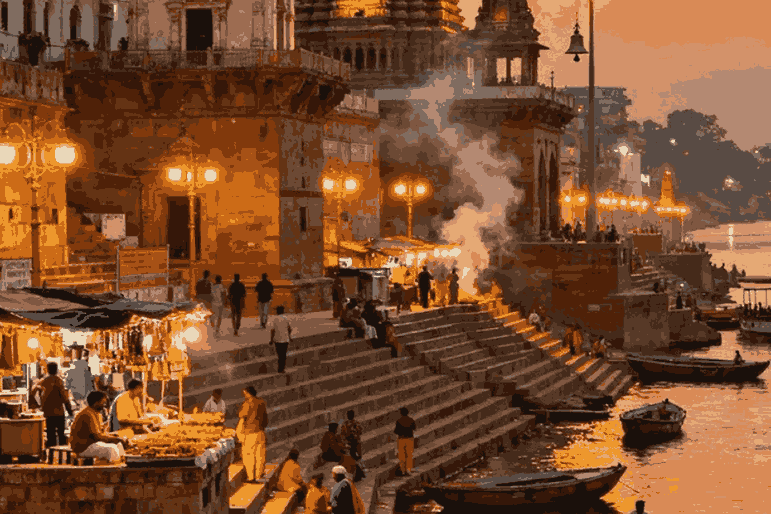
Banaras, also known as Varanasi or Kashi, is one of the oldest continuously inhabited cities in the world. Located on the banks of the sacred Ganga River, this timeless city stands as a living symbol of India’s spiritual, cultural, and historical heritage. For centuries, it has attracted saints, scholars, pilgrims, and travelers from across the globe.
As you walk through its narrow, bustling lanes, the sound of temple bells, chanting of mantras, and the fragrance of incense create an atmosphere that feels deeply spiritual. The iconic ghats, where life and death coexist in harmony, offer a unique glimpse into ancient rituals and traditions that have been practiced for generations. Watching the sunrise over the Ganga or witnessing the grand evening Ganga Aarti is an experience that leaves a lasting impression on the soul.
Moreover, Banaras is not just about spirituality—it is also a hub of art, music, and learning. From classical music and silk weaving to traditional cuisine and festivals, the city reflects a rich cultural diversity. It teaches you to slow down, observe, and connect with something beyond the material world.
Ultimately, Banaras is not just a destination; it is an experience that stays with you long after you leave—offering peace, reflection, and a deeper understanding of life itself.
A Little History — How Old is Banaras?
Varanasi dates back over 3,000 years, making it one of the oldest continuously inhabited cities in the world. Historically known as Kashi—which means “City of Light”—it has long been regarded as a center of knowledge, spirituality, and enlightenment. Ancient texts like the Rigveda also mention this sacred city, highlighting its deep historical roots.
In Hindu belief, Lord Shiva is said to reside in Varanasi, making it one of the holiest pilgrimage sites in India. It is widely believed that dying here or having one’s last rites performed along the sacred Ganga River can lead to moksha (liberation from the cycle of birth and death). This belief draws thousands of devotees and pilgrims to the city every year.
Furthermore, Varanasi is not limited to Hinduism alone—it has also played a significant role in the development of Buddhism and Jainism. Nearby Sarnath is where Gautama Buddha delivered his first sermon, marking the beginning of Buddhist teachings. Similarly, Varanasi is associated with several Jain Tirthankaras, making it an important spiritual center for Jain followers as well.
Overall, Banaras stands as a timeless symbol of faith, learning, and cultural harmony, attracting spiritual seekers, historians, and travelers from all around the world.
Spiritual Places in Banaras
Kashi Vishwanath Temple
Firstly, this is the most important temple in Banaras and one of the 12 Jyotirlingas of Lord Shiva. Thousands of devotees visit daily to seek blessings. Moreover, the golden spire of the temple shines beautifully and adds to its divine charm.
Tip: Visit early morning to avoid crowds.
Sarnath
Sarnath, located about 10 km from Varanasi, is an important Buddhist pilgrimage site where Lord Buddha gave his first sermon after enlightenment. Therefore, it holds great spiritual and historical significance.
Moreover, its peaceful atmosphere, ancient monuments like Dhamek Stupa, and green surroundings make it ideal for visitors seeking calm and spiritual insight.
Tulsi Manas Temple
This temple marks the place where Tulsidas wrote the Ramcharitmanas. Additionally, the walls display verses from the Ramayana, making it a peaceful place for devotees.
Sankat Mochan Hanuman Temple
Importantly, this temple is dedicated to Lord Hanuman and attracts devotees seeking relief from problems. Moreover, the environment here feels lively and devotional.
The Famous Ghats of Banaras
Dashashwamedh Ghat
This is the most famous ghat in Varanasi. Every evening, the grand Ganga Aarti takes place here. As a result, thousands of people gather to witness this divine ritual.
Assi Ghat
Manikarnika Ghat
Importantly, this is the main cremation ghat. It represents the cycle of life and death. Therefore, visiting this place offers a deep and meaningful experience.
Harishchandra Ghat
Harishchandra Ghat is one of the oldest cremation ghats in Varanasi. Firstly, it is known for continuous funeral rituals, which reflect the Hindu belief in life and death.
Moreover, it is named after King Harishchandra, symbolizing truth and sacrifice. Overall, the ghat offers a deep and spiritual experience.
Kedar Ghat
Kedar Ghat is one of the most peaceful and colorful ghats in Varanasi. Firstly, it is known for its bright red and white structures and scenic river views.
Moreover, the ghat is home to the Kedareshwar Temple, which holds great importance, especially among South Indian devotees. Overall, Kedar Ghat offers a calm and spiritual atmosphere, making it ideal for relaxation and photography.
Things to Do in Banaras
Take a Sunrise Boat Ride
Firstly, start your day with a boat ride on the Ganga. As the sun rises, the view becomes magical and unforgettable.
Try Banaras Street Food
In addition, don’t miss local dishes like:
- Kachori Sabzi
- Tamatar Chaat
- Lassi
- Banarasi Paan
Attend Yoga or Meditation
Furthermore, Assi Ghat offers peaceful yoga sessions, which help you relax and connect with yourself.
Explore the Old City Lanes
Finally, walking through the narrow lanes lets you experience the real life of Banaras—full of culture, colors, and surprises.
Shop for Banarasi Silk Sarees
Moreover, Banaras is famous for its silk sarees. Visiting local markets gives you a chance to see traditional weaving.
Best Time to Visit Banaras
The best time to visit is from November to February, when the weather is pleasant. Additionally, festivals like Dev Deepawali make the experience even more special.
Travel Tips
- Visit temples early to avoid crowds
- Dress modestly
- Carry cash for small purchases
- Respect local traditions and rituals
- Book boat rides and transport in advance
Conclusion
In conclusion, Banaras (Varanasi) is far more than just a destination—it is a timeless spiritual experience that leaves a lasting impression on every traveler. The sacred ghats along the Ganga, ancient temples, mesmerizing Ganga Aarti, and the city’s vibrant cultural traditions together create an atmosphere that is both powerful and deeply peaceful.
Moreover, Banaras offers a unique blend of devotion, history, and everyday life. From early morning boat rides on the river to witnessing centuries-old rituals, every moment here feels meaningful and connected to something greater. The city teaches you to slow down, reflect, and embrace simplicity.
Ultimately, whether you visit for spirituality, cultural exploration, photography, or inner peace, Banaras has the ability to transform your perspective. It is a place where faith meets life, and where every visitor carries back not just memories, but a sense of calm and spiritual fulfillment.
