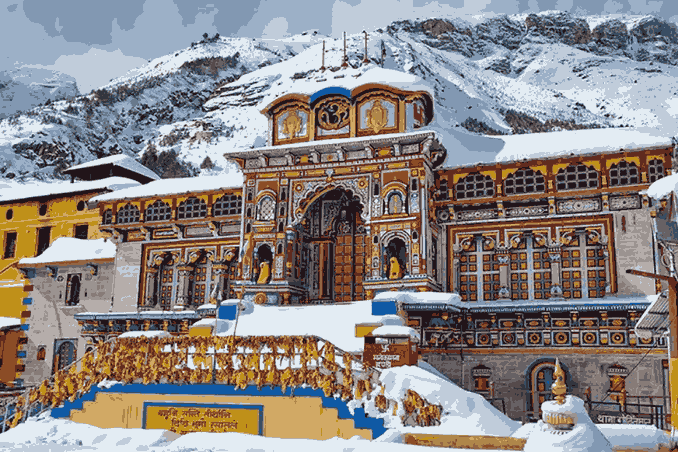
Badrinath Temple is one of the most famous and holy temples in India. It stands in the mountains of Uttarakhand at a height of about 3,300 meters. People worship Lord Vishnu here as Badri Narayan.
Badrinath forms an important part of the Char Dham Yatra, so thousands of devotees visit every year to seek blessings and peace. Beautiful mountains surround the temple, and the holy Alaknanda River flows nearby, creating a calm and special atmosphere.
The tall Neelkanth Peak rises behind the temple and looks stunning, especially in the morning sunlight. Fresh air, quiet surroundings, and natural beauty make this place perfect for spiritual and peaceful travel.
The great saint Adi Shankaracharya re-established this temple. Many people believe that Lord Vishnu meditated here, which makes this place very sacred.
The temple opens every year from April/May to October/November, and thousands of visitors come during this time to take blessings and enjoy the peaceful environment.
Visiting Badrinath is not just a trip—it is a beautiful and spiritual journey that you will always remember.
Badrinath Temple Timings
Visiting Badrinath Temple at the right time makes your darshan more peaceful and comfortable. Below is a simple and detailed timing guide.
Opening & Closing Timings
- Temple Opens: Around 4:30 AM (early morning)
- Temple Closes: Around 9:00 PM (night)
The temple remains open in two parts during the day:
- Morning session
- Evening session
Morning Darshan Details
- Darshan Time: 4:30 AM – 1:00 PM
- The day starts with Mahabhishek Puja (special puja) early morning
- Early morning is the best time for peaceful darshan (less crowd)
Many devotees prefer morning darshan because the environment is calm and spiritual.
Evening Darshan & Aarti
- Evening Darshan: 4:00 PM – 9:00 PM
- Evening Aarti (Shayan Aarti): Around 8:30 PM
Evening aarti is very beautiful, with lamps, chants, and a divine atmosphere.
Afternoon Break
- The temple remains closed from 1:00 PM to 4:00 PM
During this time, priests perform rituals and the temple rests.
Seasonal Opening & Closing
- Opening Month: April or May (on Akshaya Tritiya, date changes every year)
- Closing Month: October or November (on Bhai Dooj)
The temple is closed in winter due to heavy snowfall and extreme cold.
During winter, the idol is moved to Joshimath for puja.
Best Time to Visit Badrinath
The best time to visit Badrinath Temple depends on weather and road conditions. The temple is open only from April/May to October/November, so you need to plan your trip during these months.
The summer season (May to June) is the best and safest time to visit. During this time, the weather is cool and pleasant, and the roads are mostly clear. It is perfect for families, elderly people, and first-time visitors. You will also get clear views of the mountains and a comfortable darshan experience.
The monsoon season (July to August) brings heavy rainfall in the region. The surroundings look very green and beautiful, but there is a risk of landslides and roadblocks. Travel can become slow and sometimes unsafe. If you plan to visit during this time, you should check the weather regularly and keep extra days in your plan.
The autumn season (September to October) is another very good time to visit. After the rains, the weather becomes fresh and the sky is clear. There are fewer crowds compared to summer, so you can enjoy a peaceful darshan. This is a great time for those who want a calm and relaxed spiritual experience.
In the winter season (November to April), the temple remains closed due to heavy snowfall. During this time, puja is shifted to Joshimath.
In simple words, if you want easy travel and good weather, visit in May–June, and if you want less crowd and peaceful darshan, visit in September–October.
How to Reach Badrinath
Reaching Badrinath Temple is a beautiful journey through the Himalayas. Although there is no direct train or flight to Badrinath, you can easily reach by combining air, train, and road travel.
By Road:
The most common and easy way to reach Badrinath Temple is by road. The journey usually starts from Rishikesh, and the route goes through Devprayag, Srinagar, Rudraprayag, Karnaprayag, and Joshimath before reaching Badrinath. The total distance is around 295 km and takes about 10–12 hours. Roads are well connected, and you can travel by bus, taxi, or private car. From Joshimath (about 45 km away), regular taxis and buses are available for the final stretch.
By Air:
The nearest airport to Badrinath is Jolly Grant Airport, which is about 310 km away. After reaching the airport, you can hire a taxi or take a bus to Rishikesh or directly towards Badrinath. During the Char Dham Yatra season, helicopter services are also available, which can save time and make the journey more comfortable, especially for elderly travelers.
By Train:
The nearest railway station is Rishikesh Railway Station, but many travelers also use Haridwar railway station because it has better train connectivity. From the railway station, you can easily get buses, shared taxis, or private cabs to reach Badrinath. The road journey from here is scenic but long, so it is best to start early in the morning.
Places to Visit Near Badrinath
When you visit Badrinath Temple, there are some beautiful and spiritual places nearby that you should not miss. These places are easy to visit and add more meaning to your journey.
Tapt Kund
Tapt Kund is a natural hot water spring located just near the temple. It is believed that taking a bath here before darshan purifies the body and mind. Even in very cold weather, the water remains warm, which feels very relaxing. Most pilgrims take a dip here before entering the temple.
Mana Village (India’s Last Village)
Mana Village is the last Indian village near the Indo-Tibet border, located about 3 km from Badrinath. This small and beautiful village is known for its traditional houses and peaceful environment. You can also visit places like Bheem Pul and Vyas Gufa here. It is a must-visit place to experience local culture and scenic beauty.
Charan Paduka
Charan Paduka is a sacred rock believed to have the footprints of Lord Vishnu. It is located around 3 km uphill from Badrinath and requires a short trek. The trek may be a bit steep, but the view from the top is very beautiful and peaceful. It is a special place for devotees and nature lovers.
Neelkanth Peak
Neelkanth Peak is a tall and majestic mountain located behind Badrinath Temple. It is also called the “Garhwal Queen” because of its beauty. The peak looks especially stunning during sunrise when the sunlight falls on it. Although you cannot easily climb it, the view itself is unforgettable.
Travel Tips for Visitors
Planning your trip to Badrinath Temple properly can make your journey safe and comfortable. Here are some important tips in easy language.
What to Carry
When visiting Badrinath, always pack wisely because the weather can change quickly.
- Carry warm clothes like jackets, sweaters, and woolen caps (even in summer it can be cold)
- Wear comfortable shoes for walking and trekking
- Keep personal medicines and a basic first aid kit
- Carry ID proof (Aadhar card, etc.) for hotels and travel
- Keep water bottles, snacks, and power bank
Health & Altitude Precautions
Badrinath is located at a high altitude, so your body may take time to adjust.
- Walk slowly and take proper rest
- Drink enough water to stay hydrated
- Avoid heavy food before darshan
- If you feel headache, dizziness, or breathing issues, take rest immediately
- People with health problems should consult a doctor before traveling
Safety Tips for Families & Elderly
Traveling with family or elderly members needs extra care.
- Avoid night travel in mountain areas
- Start your journey early in the morning
- Book hotels in advance to avoid last-minute problems
- Help elderly people while walking or climbing
- Keep emergency contact numbers saved
Conclusion
A visit to Badrinath Temple is not just a journey, but a deeply spiritual and peaceful experience. Surrounded by the beautiful Himalayas and the holy Alaknanda River, this sacred place gives a feeling of calm and positivity that stays with you even after you return.
With proper planning—knowing the right timings, best season to visit, travel routes, and safety tips—you can make your trip smooth and enjoyable. Whether you are visiting for religious reasons, with family, or simply to enjoy nature, Badrinath offers something special for everyone.
In simple words, travel with care, respect the place, and take your time to truly experience the beauty and peace of this holy destination. Your Badrinath yatra will surely become a memorable and meaningful journey.
