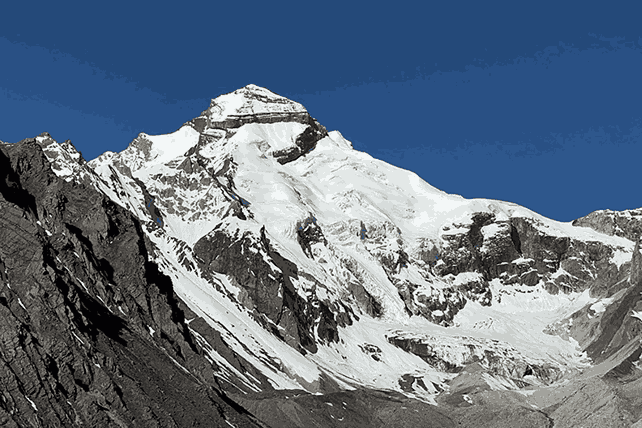
Adi Kailash, standing at 6,191 meters in the remote Pithoragarh district of Uttarakhand, is one of those special places. It is often compared to Mount Kailash in Tibet, believed to be the home of Lord Shiva. Because of this, Adi Kailash is also called “Chhota Kailash” or “First Kailash.” For many years, it has attracted pilgrims, travelers, and people looking for peace. Even today, it remains quiet and less crowded.
Additionally, nearby, Om Parvat is another amazing sight. The snow on this mountain naturally forms the shape of “Om,” which many people find deeply spiritual. Moreover, below it lies Parvati Kund, a calm and beautiful lake that adds to the peaceful feeling of the place.
However, Adi Kailash is not a place you can visit anytime. The weather changes a lot, and as a result, the experience depends on the season. Therefore, this guide will help you understand the best time to visit, month by month, so you can plan your journey in the right way.
Best Time to Visit Adi Kailash: Month-by-Month
April — June(Spring & Early Summer)
When the mountains wake up and say welcome
Firstly, this is the golden window — the time when Adi Kailash throws open its arms to travellers. As April arrives, winter’s snowpack begins retreating upward, unveiling meadows of rhododendrons in full flame and trails that are finally passable. By May and June, the route is humming with pilgrims, photographers, and trekkers who know this season’s secret: impossibly clear skies, benevolent temperatures, and views of Om Parvat that will rearrange your idea of beauty.
Weather
Days warm to 10–20°C, nights dip to 0–5°C. Low rainfall, excellent visibility.
Accessibility
In addition, roads fully operational by mid-April. Trekking routes clear of heavy snow.
Crowd Level
Peak season — vibrant but busy. Book transport and accommodation in advance.
Highlights
crystal-clear Om Parvat views, the pristine Parvati Kund lake.
Activities: Additionally, activities include the full Adi Kailash parikrama (circumambulation), photography at Om Parvat viewpoints, bird-watching in the oak forests below Gunji, and dawn meditation at Parvati Kund.
What to Pack
Thermal base layers, insulating mid-layer, windproof shell jacket, sturdy trekking boots, trekking poles, sun hat, UV-400 sunglasses, SPF 50+ sunscreen, a light sleeping bag (rated to -5°C), water purification tablets.
July — August(The Monsoon Season)
For those who find poetry in mist and persistence
On the other hand, the monsoon transforms Adi Kailash into an entirely different world — one of primordial greens, theatrical waterfalls, and veils of cloud drifting through the valleys like slow-moving spirits. It is hauntingly beautiful, and equally challenging. Roads near Dharchula and beyond can be disrupted by landslides, leeches emerge on the lower trails, and river crossings demand respect. For most travellers, this is a season to skip. For the few who persist, it offers a solitude and a raw, elemental drama that no other season can match.
Weather
12–22°C by day; heavy, intermittent rainfall. High humidity at lower elevations.
Accessibility
Landslide risk is real. Road closures possible. Route requires flexibility and patience.
Crowd Level
Very low. You may have the trails almost entirely to yourself.
Highlights
Roaring waterfalls, intensely lush valleys, mystical fog-draped peaks.
Activities: Additionally, activities include contemplative trekking in the rain, macro nature photography of ferns, fungi and wildflowers, and quiet time at the Narayan Ashram near Tawaghat.
What to Pack
Heavy-duty waterproof jacket and trousers, waterproof trekking boots with ankle support, gaiters, quick-drying synthetics (no cotton), a dry-bag for electronics, insect repellent with DEET, antifungal foot powder, and a well-stocked first-aid kit.
September — October(Autumn — The Quiet Gold)
Similarly, September to October is one of the best times to visit Adi Kailash. As the monsoon ends, the weather becomes clear and fresh. At the same time, the sky turns deep blue, and the mountains look sharp and beautiful.
Moreover, the forests start changing colors, showing shades of yellow, orange, and gold. This makes the landscape look even more stunning. In addition, October offers perfect light, which is ideal for photography.
Meanwhile, the number of tourists decreases after early September. So, you can enjoy a peaceful and quiet journey. Even better, the roads and trekking routes remain open and safe during this time.
Therefore, overall, this season gives you the perfect balance of beauty and comfort without heavy crowds.
Best for: clear views, photography, and a calm experience
Weather
Ideal: 5–18°C by day. Cool, dry, stable. Nights grow cold by October (−2 to 5°C).
Accessibility
Excellent. Roads cleared, trails dry and firm. The route to Jolingkong is at its most comfortable.
Crowd Level
Low to moderate. September still has some pilgrims; October is near-empty.
Highlights
Autumnal foliage, razor-sharp Om Parvat views, star-filled nights at Jolingkong base.
Activities: Photography (especially golden-hour shots of the Kailash face), high-altitude camping, birdwatching for Himalayan snowcock and griffon vultures, and the full parikrama route at a contemplative pace.
What to Pack
All spring kit, plus a warmer sleeping bag (rated to −10°C for October nights), balaclava, insulated gloves, and hand warmers. Carry extra rations — village shops near the final stretch can be sparse.
November — March(Winter’s Long Silence)
The mountain at rest — and mostly inaccessible
In contrast, by November, the high passes are buried under snow and the government typically closes the Adi Kailash route entirely. Temperatures plunge to −15°C or below at the higher elevations. Villages like Gunji and Budhi are largely deserted, their inhabitants having migrated to lower valleys for the winter. This is not a season for visiting — it is a season for planning your return. Base towns like Dharchula and Pithoragarh remain accessible and offer a quieter, more local face of Kumaon worth experiencing.
Weather
Severe. −15°C to +5°C range. Heavy snowfall at high altitude. Blizzard risk.
Accessibility
Route officially closed. The Lipulekh Pass and upper valley inaccessible.
Crowd Level
Zero. No tourist infrastructure operating in the high-altitude zone.
Highlights
Pithoragarh town, the Dharchula market, and Kumaon’s winter folk traditions.
For those intent on winter visits to the lower Dharchula area: the Himalayan landscape under snow is otherworldly, local markets offer excellent woollen crafts, and you will have genuine village hospitality with no tourist economy around you.
What to Pack
Expedition-grade down jacket, insulated trousers, heavy mountaineering boots, multiple thermal layers, a balaclava, and chemical heat packs. Only for experienced high-altitude travellers with proper gear.
Best Time to Visit Adi Kailash for Every Traveler
For First-Timers
May to June. Optimal weather, full accessibility, active pilgrimage energy, and the clearest possible views of Om Parvat.
For Photographers
Late September to mid-October. Extraordinary light, golden foliage, sapphire skies, and far fewer people in your frame.
For Pilgrims
May through June — the traditional season of the Adi Kailash yatra, when the spiritual atmosphere is at its most concentrated.
For Adventurers
September offers the best balance of challenge and accessibility — remote feel without the genuine hazards of monsoon travel.
Essential Tips
Permits
Since Adi Kailash lies near the Indo-Nepal and Indo-Tibet borders, an Inner Line Permit (ILP) is mandatory for Indian nationals. Foreign nationals require additional permits. Apply through the SDM office in Dharchula or via registered tour operators — process well in advance, especially in peak season.
Altitude & Health
Furthermore, Jolingkong, the base camp near Adi Kailash, sits at around 4,780 metres. Acclimatise gradually — spend at least one full day in Gunji (3,300m) before pushing higher. Descend immediately at the first signs of acute mountain sickness (AMS). Carry Diamox only on medical advice.
Getting There
The nearest airport is Pantnagar (~295 km). Pithoragarh is the main base town, connected by road from Kathgodam and Haldwani. From Pithoragarh, shared jeeps and taxis run to Dharchula, the true gateway. The KMOU (Kumaon Motor Owners Union) and KMVN organise regular services.
Connectivity
However, mobile coverage vanishes after Dharchula. BSNL has the widest reach on this route but remains patchy. Carry a satellite communicator or personal locator beacon (PLB) if trekking independently. Inform family of your itinerary before you lose signal.
Local Customs
Adi Kailash is a living pilgrimage site. Dress modestly, remove footwear at temples and sacred sites, and maintain silence near Parvati Kund. Ask before photographing local villagers or rituals. A few words of Hindi go an enormous distance in building goodwill.
Responsible Travel
Carry all your non-biodegradable waste back to Dharchula — there is no waste management infrastructure on the high route. Use refillable water bottles and purification tablets rather than plastic. Camp only in designated areas and leave absolutely no trace at Parvati Kund.
Conclusion
Adi Kailash is not just a travel destination—rather, it is a spiritual and scenic journey deep into the Himalayas. From the peaceful waters of Parvati Kund to the divine views of Om Parvat, every moment here feels special and meaningful.
Therefore, choosing the best time to visit Adi Kailash plays a key role in your overall experience. While May to June offers the most comfortable weather and smooth travel conditions, similarly, September to October is perfect for clear views, fewer crowds, and peaceful surroundings. However, the monsoon and winter seasons can be challenging due to landslides and heavy snowfall.
So, if you plan your trip wisely, follow local guidelines, and respect the natural environment, your Adi Kailash Yatra will become a safe, memorable, and life-changing experience. In addition, responsible travel helps preserve this sacred place for future visitors.
Finally, Adi Kailash is not just about reaching a place—instead, it is about experiencing peace, devotion, and the true beauty of the mountains.
