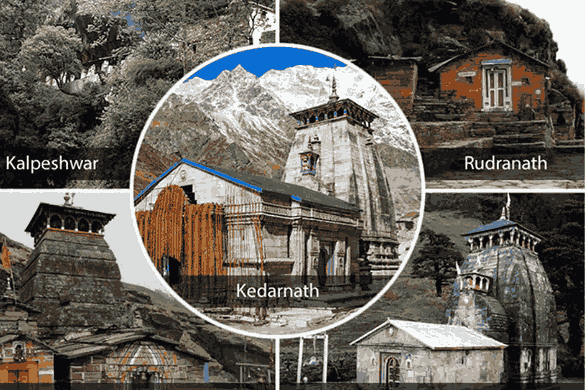
Panch Kedar Name: List of the 5 Sacred Shiva Temples in Uttarakhand
There are few spiritual journeys in India that feel as powerful and peaceful as the Panch Kedar Yatra. Hidden in the majestic Himalayan mountains of Uttarakhand, these sacred temples dedicated to Lord Shiva attract thousands of pilgrims every year.
When people search for the Panch Kedar name, they are usually curious about the five ancient temples connected with a fascinating story from Hindu mythology. These temples are not just places of worship. They are symbols of devotion, faith, and spiritual exploration.
Imagine standing in the middle of the Himalayas, surrounded by snow-covered peaks, cold mountain winds, and absolute silence. In moments like these, pilgrims often say they feel closer to God than anywhere else.
The Panch Kedar temples are believed to be the places where different parts of Lord Shiva appeared after the events of the Mahabharata. Because of this sacred legend, the five temples hold immense religious importance for devotees.
In this detailed guide, we will explore:
- Panch Kedar name list
- History and mythology of Panch Kedar
- Location and significance of each temple
- Best time to visit
- Panch Kedar Yatra route and travel guide
If you are planning a spiritual journey or simply want to understand the significance of these sacred temples, this guide will help you discover everything about the Panch Kedar temples of Uttarakhand.
What Does Panch Kedar Mean?
The phrase Panch Kedar comes from two Sanskrit words.
- Panch means five
- Kedar refers to Lord Shiva
Together, the term Panch Kedar means the five sacred temples of Lord Shiva located in the Garhwal Himalayas of Uttarakhand.
These temples are considered among the most important Shiva pilgrimage sites in India.
What makes them unique is that each temple represents a different part of Lord Shiva’s body according to ancient mythology.
The temples are located in remote mountain regions, which means pilgrims often need to travel through winding roads, small villages, and beautiful trekking routes to reach them. For many devotees, the journey itself becomes a spiritual experience.
Panch Kedar Name List
The Panch Kedar name includes the following five temples:
- Kedarnath
- Tungnath
- Rudranath
- Madhyamaheshwar
- Kalpeshwar
All five temples are located in the Garhwal region of Uttarakhand, surrounded by breathtaking Himalayan landscapes.
Each temple is associated with a particular part of Lord Shiva’s body that appeared there according to legend.
Story Behind the Panch Kedar Temples
The origin of the Panch Kedar temples is closely connected with the Mahabharata, one of the greatest epics of Hindu mythology.After the devastating Kurukshetra war, the Pandavas were deeply troubled by the sins they had committed during the battle. They sought forgiveness from Lord Shiva.
However, Lord Shiva did not want to forgive them easily. To avoid them, he disguised himself as a bull (Nandi) and hid in the Garhwal Himalayas.The Pandavas eventually found him. Bhima, one of the Pandava brothers, tried to catch the bull. But the bull suddenly disappeared into the ground.
When this happened, different parts of Lord Shiva’s body appeared at five different locations in the Himalayas.
These places later became the Panch Kedar temples.
The body parts worshipped at the temples are believed to be:
- Hump – Kedarnath
- Arms – Tungnath
- Face – Rudranath
- Navel – Madhyamaheshwar
- Hair (Jata) – Kalpeshwar
This powerful legend is the reason why the Panch Kedar temples hold such deep spiritual significance.
1. Kedarnath Temple
Kedarnath is the most famous and important temple among the Panch Kedar.
Located at an altitude of around 3,583 meters, the temple sits near the Mandakini River and is surrounded by towering Himalayan peaks. kedarnath is also one of the twelve Jyotirlingas of Lord Shiva, which makes it even more sacred for devotees.
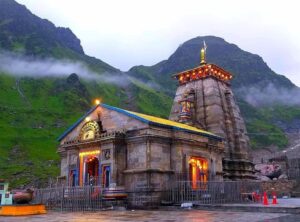
At Kedarnath, the hump of Lord Shiva is worshipped.The temple is believed to have been originally built by the Pandavas and later revived by the philosopher Adi Shankaracharya in the 8th century.Pilgrims usually begin their journey to Kedarnath from Gaurikund, which is about 16 km away. The trek passes through stunning mountain scenery, waterfalls, and valleys.
Every year, thousands of pilgrims undertake this journey despite the challenging terrain because of the deep spiritual connection they feel with the temple.
2. Tungnath Temple
Tungnath is known as the highest Shiva temple in the world.Situated at an altitude of about 3,680 meters, the temple lies in the Rudraprayag district of Uttarakhand.In this temple, the arms of Lord Shiva are worshipped.
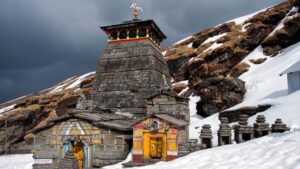
The trek to Tungnath begins from Chopta, a beautiful hill station often called the Mini Switzerland of India. The trekking distance from Chopta to Tungnath is about 3.5 kilometers, making it one of the easiest Himalayan treks.
Despite the short trek, the views along the way are extraordinary. Visitors can see majestic peaks such as Nanda Devi, Trishul, and Chaukhamba. Many pilgrims also continue the trek to Chandrashila Peak, which offers one of the most spectacular panoramic views in the Himalayas.
3. Rudranath Temple
Rudranath is one of the most mystical temples among the Panch Kedar.The temple is located at an altitude of approximately 3,600 meters and is surrounded by lush alpine meadows, dense forests, and quiet mountain landscapes.At Rudranath, the face of Lord Shiva is worshipped.
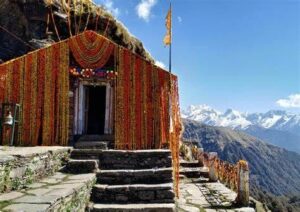
Reaching this temple requires a relatively long trek through scenic Himalayan terrain. The journey is challenging but incredibly rewarding. One of the unique aspects of Rudranath Temple is the peaceful atmosphere that surrounds it. Unlike some of the more crowded pilgrimage sites, Rudranath offers a deep sense of calm and spiritual solitude.
Many pilgrims say that the silence of the mountains here makes meditation and prayer even more powerful.
4. Madhyamaheshwar Temple
Madhyamaheshwar Temple is another important temple in the Panch Kedar pilgrimage.The temple stands at an altitude of about 3,289 meters and is located in a beautiful valley surrounded by lush greenery and Himalayan peaks.Here, the navel (middle part) of Lord Shiva is worshipped.
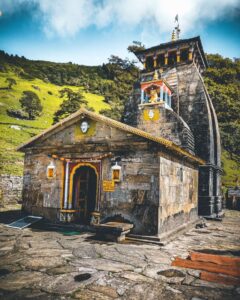
The trek to Madhyamaheshwar begins from Ransi village, and the total trekking distance is about 16–18 kilometers. One of the most breathtaking sights near the temple is a small pond that reflects the magnificent Chaukhamba peaks. Many visitors wake up early in the morning just to watch the sunrise illuminate the mountains.
The temple area is peaceful and less crowded, making it a wonderful place for spiritual reflection.
5. Kalpeshwar Temple
Kalpeshwar is the final temple among the Panch Kedar.Unlike the other temples, Kalpeshwar is open throughout the year, which makes it accessible even during winter months.The temple is located in the beautiful Urgam Valley of Uttarakhand.At Kalpeshwar, the hair (jata) of Lord Shiva is worshipped.
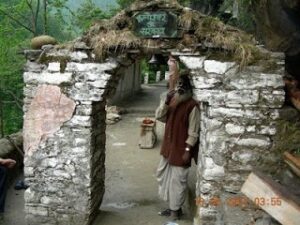
The temple itself is located inside a small cave, giving it a unique and mystical atmosphere. Visitors can reach Kalpeshwar through a short trek from Helang village, which lies on the road between Joshimath and Badrinath.
The peaceful surroundings and natural beauty of Urgam Valley make Kalpeshwar a truly special destination.
Importance of Panch Kedar Yatra
The Panch Kedar Yatra is considered one of the most sacred pilgrimages dedicated to Lord Shiva.
Many devotees believe that visiting all five temples helps cleanse the soul and brings spiritual peace.
Some reasons why pilgrims undertake the Panch Kedar journey include:
- Seeking blessings of Lord Shiva
- Spiritual purification
- Experiencing the beauty of the Himalayas
- Following the footsteps of ancient pilgrims
Completing the entire Panch Kedar Yatra is often seen as a symbol of devotion and dedication.
Best Time to Visit Panch Kedar
The best time to undertake the Panch Kedar pilgrimage is during the summer and early autumn months.
Ideal months
- May
- June
- September
- October
During these months, the weather is generally pleasant, and the trekking routes remain accessible.
Most temples close during winter due to heavy snowfall. However, Kalpeshwar Temple remains open throughout the year.
Panch Kedar Yatra Route
All five Panch Kedar temples are located in the Garhwal region of Uttarakhand, India.
Which is the highest Panch Kedar temple?
Tungnath Temple is the highest Shiva temple in the world.
Which Panch Kedar temple is open throughout the year?
Kalpeshwar Temple remains open in all seasons.
Conclusion
The Panch Kedar name represents five sacred temples that hold deep religious and historical significance in Hindu tradition. Located in the breathtaking Himalayan region of Uttarakhand, these temples attract pilgrims from all over India and the world.
Each temple tells a story connected to Lord Shiva and the Pandavas, reminding devotees of faith, devotion, and spiritual growth.
Whether you are a pilgrim seeking blessings or a traveler looking for an unforgettable Himalayan experience, the Panch Kedar Yatra offers a journey that is both physically challenging and spiritually rewarding.
Standing among the towering mountains and ancient temples, many visitors realize that the Panch Kedar journey is not just about reaching a destination — it is about discovering peace within.
